
Why Regional Bonsai Shows Matter More Than National Exhibitions
We’ve noticed a troubling trend in bonsai discourse: the lionization of massive national exhibitions while grassroots regional shows receive barely a mention. When we learned about the Pittsburgh Bonsai Society’s 45th Annual Bonsai Show, it reinforced what we’ve long argued: these mid-sized regional gatherings represent the true heart of American bonsai cultivation, and dismissing them as “minor” events misses the point entirely.
The Apprenticeship Gap Most Guides Ignore
Here’s what conventional bonsai literature gets wrong: it assumes knowledge transfer happens primarily through books, videos, and workshop demonstrations. In our view, this fundamentally misunderstands how bonsai expertise actually develops. Regional shows running for decades create something far more valuable than any weekend workshop—they establish multi-generational teaching chains where growers return year after year, observing the same specimens mature under the same hands.
When a society reaches its 45th year, you’re looking at trees that have been in training longer than most practitioners have been alive. The Trident maples and Eastern white pines displayed this year in Pittsburgh weren’t styled last month for Instagram. Many have been refined continuously since the Carter administration, passing through multiple stages of development that no beginner will ever witness in real time without access to these long-running exhibitions.
What Regional Shows Teach That Master Classes Cannot
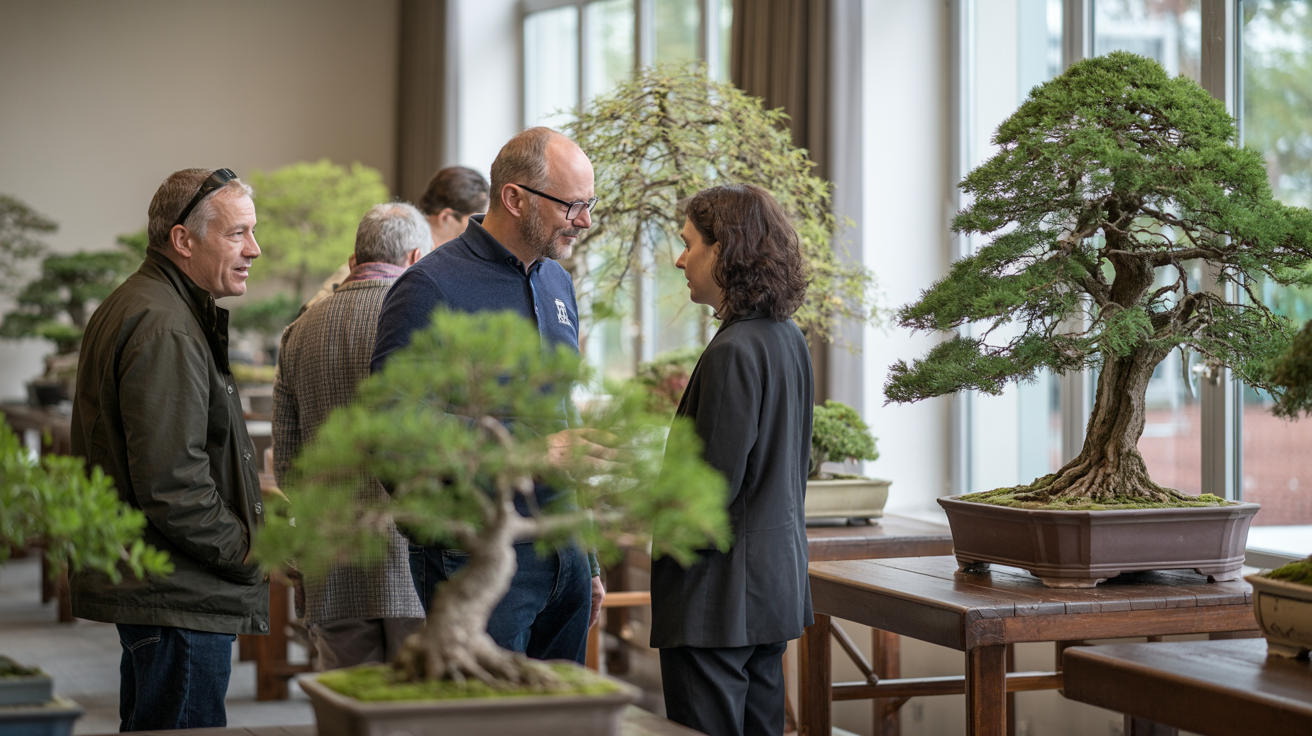
We would argue that the primary value of regional shows isn’t the display trees themselves—it’s the unscripted conversations happening in the aisles. At a national exhibition, attendees crane their necks at masterpieces behind barriers, perhaps catching a scheduled demonstration. At a regional show in its 45th iteration, you’ll find the person who styled that Korean hornbeam standing right beside it, happy to explain why they chose that front angle in 1997 and why they’re reconsidering it now.
This matters immensely for practical technique acquisition. Consider yamadori collection timing for Appalachian species—information that varies dramatically by microclimate and elevation. A practitioner in Pittsburgh working with native Eastern hemlocks faces entirely different seasonal windows than someone following generic “early spring” advice written for Pacific Northwest conditions. Regional societies accumulate this hyperlocal knowledge organically, and their shows become annual opportunities to verify what actually works in your specific latitude and soil type.
The Concrete Technique: Seasonal Show Scouting
Here’s our recommended approach for maximizing regional show value. Three weeks before your local society’s annual exhibition, identify which species you currently struggle with. Not categories—specific species. If you’re fighting with Ilex crenata styling, Japanese black pine candle selection, or Carpinus caroliniana ramification, write those down.
Attend the show with that list and systematically photograph every specimen of your problem species from multiple angles. Crucially, photograph the pot selection, soil surface treatment, and—if visible—the nebari structure. Take notes on branch spacing and foliage pad density. Then approach the owner during the show hours and ask one specific technical question: not “how did you style this” but rather “what month do you perform your heaviest pruning” or “how many years between repotting for this specimen.”
This targeted reconnaissance transforms a pleasant afternoon into actionable intelligence. The discipline required for systematic observation and specific questioning parallels what apprentices learn through years of focused study, compressed into a single exhibition visit.
Our Take
Regional shows operating for 45 years represent living libraries of localized technique that no book can replicate. They deserve recognition not as minor league versions of national exhibitions, but as essential infrastructure for knowledge preservation in American bonsai culture.
Actionable Takeaway
Before attending your next regional bonsai show, commit to learning one specific technique for one specific species you already own. Photograph examples, ask targeted questions, and implement what you learn within one week. Document your results and return next year to report your progress to the grower who advised you—this completes the knowledge cycle that makes regional societies irreplaceable.
This article was created with AI assistance by the Bonsai World editorial team.