
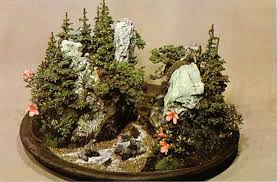
We’ve been following the work of Toshio Kawamoto for years, and what strikes us most is how his approach quietly challenges some of the more rigid conventions in contemporary bonsai. While many practitioners have carved out recognition through flamboyant styling or adherence to classical forms, Kawamoto is widely regarded as a master whose strength lies in subtlety, restraint, and an almost austere commitment to naturalism. His trees don’t shout for attention—they invite prolonged observation, revealing their depth slowly.
Kawamoto is particularly known for his work with conifers, especially pines and junipers, where he demonstrates an extraordinary sensitivity to the inherent character of the material. In our view, what sets him apart is his refusal to impose a preconceived vision onto a tree. Instead, he works in partnership with the specimen, allowing its natural growth patterns, trunk movement, and foliage distribution to guide design decisions. This philosophy aligns closely with traditional principles of bonsai aesthetics, yet Kawamoto brings a distinctly modern patience to the process—a willingness to wait years for a tree to express its own direction rather than forcing it into form prematurely.
The Discipline of Negative Space
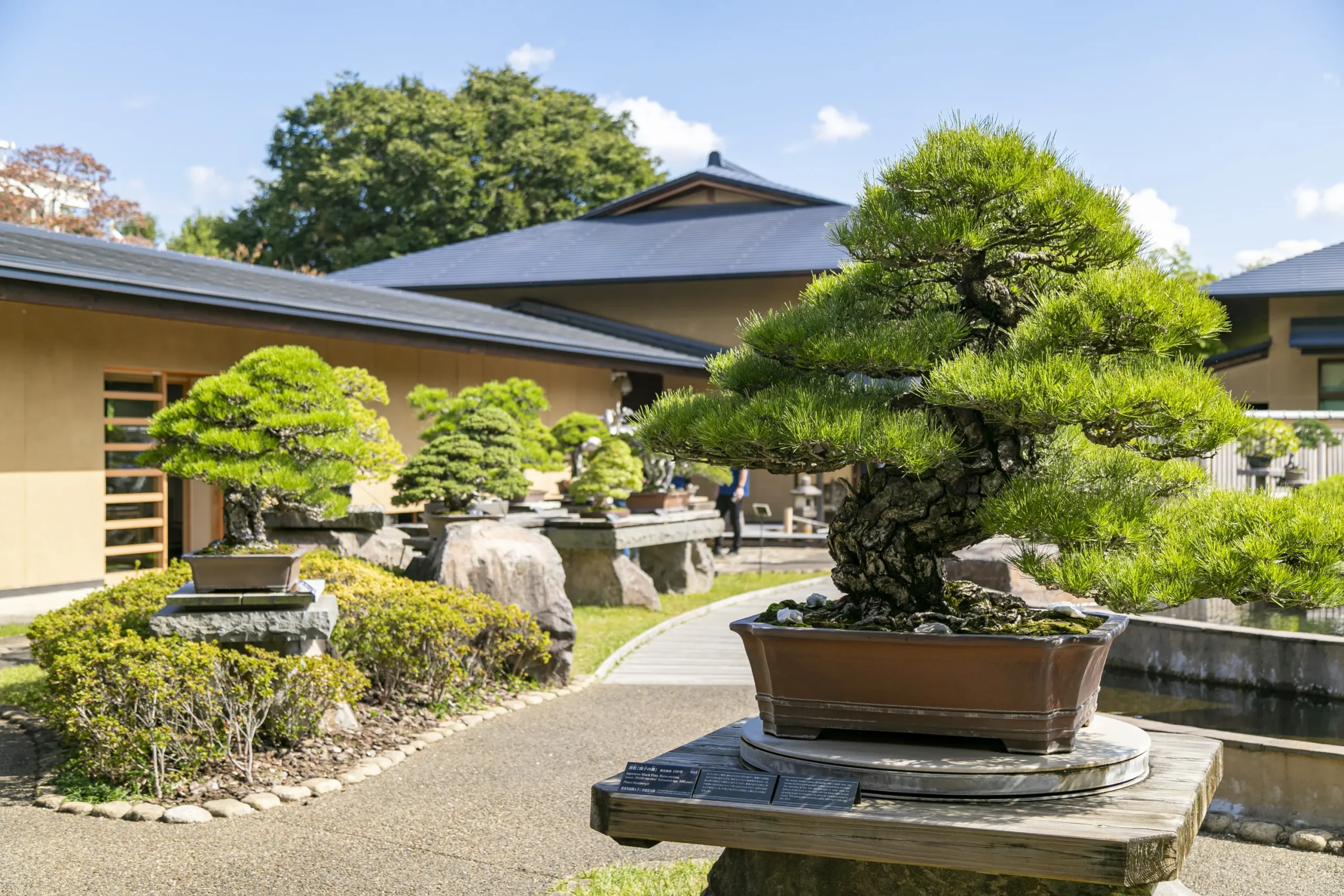
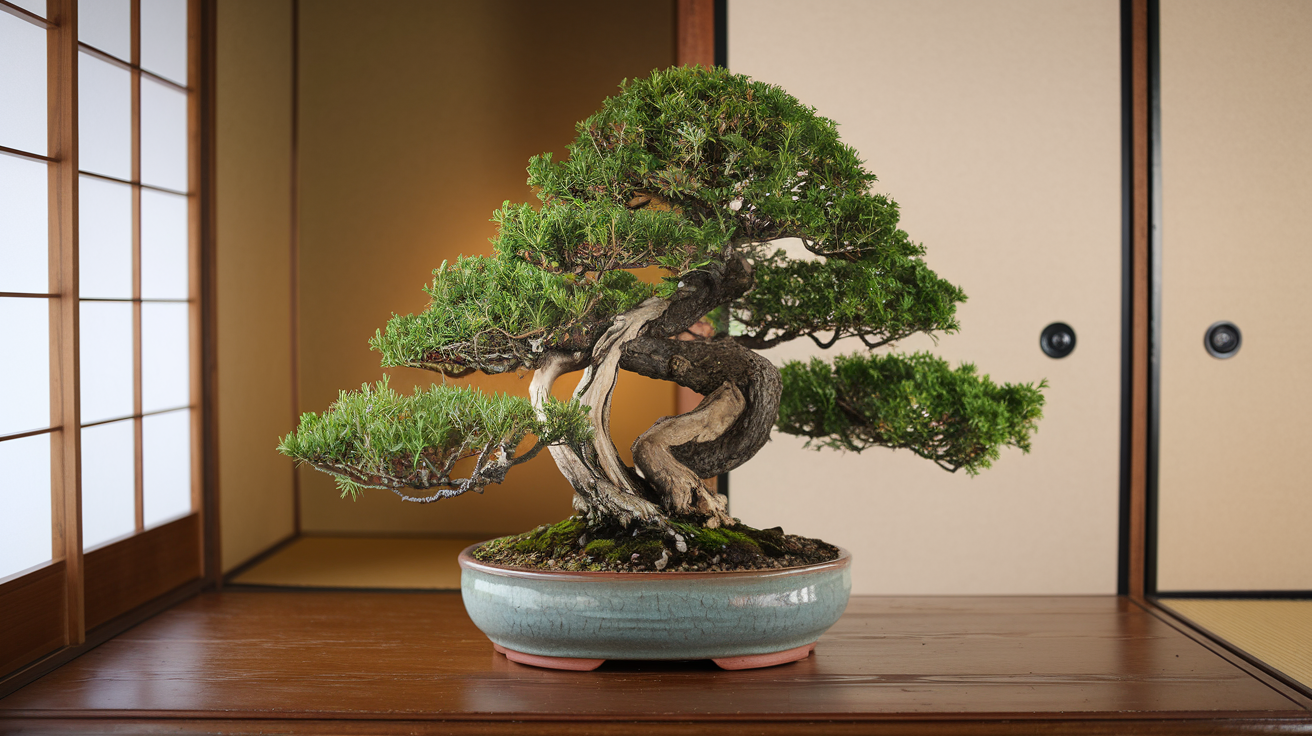
One of the most instructive aspects of Kawamoto’s styling is his masterful use of negative space. Where less experienced growers often feel compelled to fill every void with foliage or branching, Kawamoto understands that emptiness itself is a powerful compositional tool. His trees breathe. The spaces between branches are as deliberate as the branches themselves, creating a visual rhythm that mimics the way mature trees grow in challenging natural environments—windswept ridges, rocky outcrops, places where survival demands economy.
This approach requires not only technical skill but also emotional discipline. It’s tempting to add another branch, to thicken a pad, to “improve” what already works. Kawamoto’s work teaches us that restraint is often the more difficult and more rewarding path. His pines, in particular, display an elegant sparseness that makes them feel ancient without appearing tortured or over-manipulated.
Influence and Philosophy
Kawamoto’s influence extends beyond his own garden. He is associated with a broader movement within Japanese bonsai that values authenticity over spectacle, emphasizing trees that could plausibly exist in nature rather than those that merely demonstrate technical virtuosity. This doesn’t mean his trees lack sophistication—quite the opposite. The craftsmanship required to make a styled tree appear unstylized is considerable.
What we find most compelling about his philosophy is the implicit humility. There’s an acknowledgment that the grower is not the sole author of the work. The tree itself, its species characteristics, its history, the scars it carries—all of these are collaborators. This perspective can be liberating for intermediate growers who may feel trapped by rigid stylistic rules or intimidated by the perfection often displayed at exhibitions.
Our Take
Kawamoto represents a counterbalance in a bonsai world that sometimes prizes drama over depth. His trees won’t necessarily win photography contests or dominate social media feeds, but they offer something more enduring: a model for how patience, observation, and restraint can produce work of profound beauty. For those of us who see bonsai as a meditative practice rather than merely an ornamental one, his approach feels essential.
Actionable Takeaway
Before you wire, prune, or style your next tree, spend time simply observing it from multiple angles and in different light. Ask yourself what the tree is already saying, rather than what you want it to say. Practice removing one element—a branch, a cluster of foliage—and living with that absence for a season. Kawamoto’s work reminds us that the best bonsai decisions are often subtractions, not additions.
This article was created with AI assistance by the Bonsai World editorial team.