
The Case for Reviving Deadwood Sculpting in Yew Bonsai
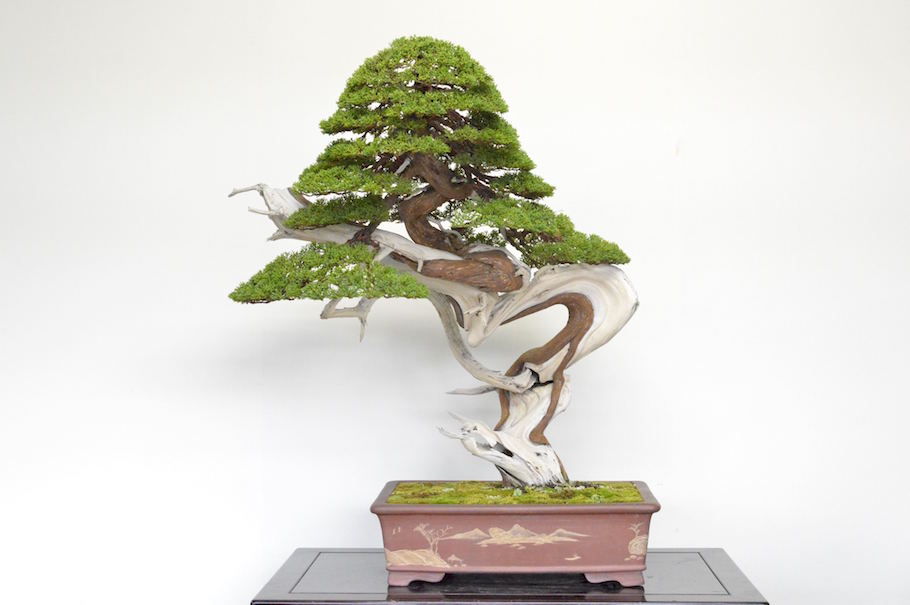
We’ve noticed a troubling trend in contemporary bonsai practice: the slow abandonment of intensive deadwood work on certain species, particularly yew. While recent work by Andrès Alvarez on an impressive yew specimen showcased at Bonsai Today reminds us of what’s possible, we would argue that too many practitioners have moved away from the painstaking jin and shari techniques that make yew (Taxus species) one of the most compelling subjects in our art.
Why Yew Demands Different Treatment
In our view, most contemporary guides get one critical aspect wrong: they lump yew deadwood treatment together with juniper protocols, and this is a mistake. Yew heartwood behaves fundamentally differently. Where juniper deadwood bleaches naturally and maintains structural integrity for decades with minimal intervention, yew deadwood requires a more nuanced approach. The wood is denser, less prone to natural weathering, and paradoxically both more rot-resistant and more challenging to preserve aesthetically.
What Alvarez’s work demonstrates—and what we believe has been forgotten—is that yew deadwood must be worked more aggressively in the initial carving phase, then protected more carefully afterward. The species doesn’t give you the dramatic silvering that juniper offers without deliberate intervention. This is why historical European masters spent considerably more time on the sculpting phase with yew than contemporary practitioners typically allocate.
The Timing Window Most Practitioners Miss
Here’s the specific detail that separates mediocre yew deadwood from exceptional work: the optimal carving window is late winter, specifically February through early March in temperate zones, just before the sap begins rising. During this period, the moisture content in both live and dead wood reaches an equilibrium that makes power carving safer for the living tissue while keeping the dead wood from splintering excessively.
Most guides recommend summer carving for convenience—the tree is vigorous, recovery is assured. But summer carving on yew creates a different texture entirely. The wood tears rather than cuts cleanly, and the distinction matters enormously for the final aesthetic. Winter-carved yew deadwood develops those fine longitudinal striations that mimic centuries of natural weathering, while summer-carved surfaces remain stubbornly smooth and artificial-looking even after years.
A Concrete Technique for Better Shari
We recommend this specific approach for creating shari on established yew bonsai:
- Remove bark in late February using a sharp grafting knife, not rotary tools, working in narrow vertical strips no wider than one centimeter
- Allow the exposed cambium to dry for exactly three weeks without any treatment
- Apply the first carving pass with a Dremel and a structured tooth carbide bit, working only with the grain, never across it
- Hand-finish with progressively finer wire brushes—start with brass, finish with stainless steel
- Apply lime sulfur only after the wood has weathered naturally for one full growing season
This protocol contradicts the immediate lime sulfur application that many bonsai cultivation guides recommend, but we’ve observed that premature sealing prevents the necessary initial oxidation that gives yew deadwood its characteristic warm tone.
Why This Matters Now
The broader issue here extends beyond technique. As bonsai practice globalizes and speeds up—driven by social media’s demand for quick results—we risk losing precisely these species-specific refinements that took generations to develop. Yew work cannot be rushed. The trees live for centuries; the deadwood work should reflect that temporal scale. When we abandon these intensive techniques, we’re not just simplifying our practice—we’re fundamentally altering what’s possible aesthetically with certain species.
Our Take
Reviving forgotten techniques isn’t about nostalgia or tradition for its own sake. It’s about maintaining the full range of artistic expression our art form allows. Yew deadwood done properly creates a visual impact that no other species can match—that combination of dense, dark foliage against deeply textured, bone-white wood. We owe it to the material to work it correctly.
Actionable takeaway: If you have a yew in development, mark your calendar for late February. Identify one branch for removal now, and commit to trying proper winter carving next season. Experience the difference in wood texture firsthand—your future styling decisions will be informed by that single exercise.
This article was created with AI assistance by the Bonsai World editorial team.