
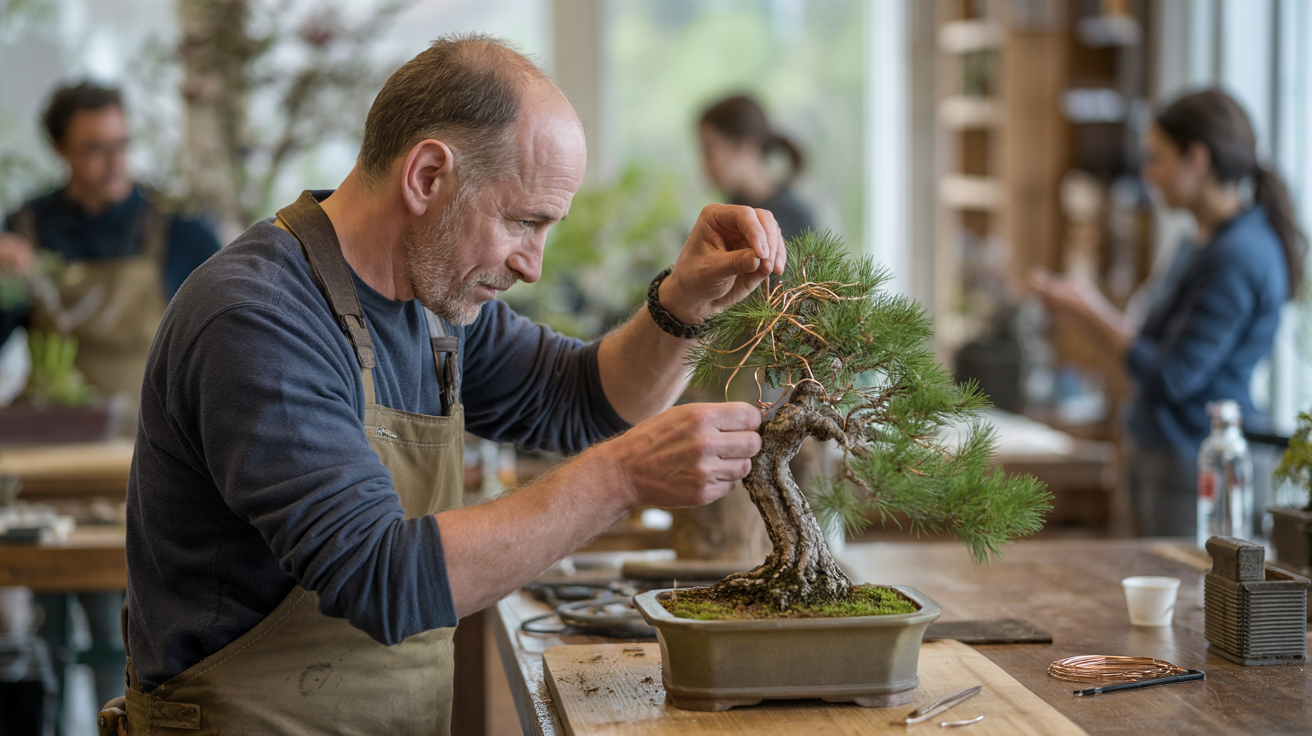
Lodgepole Pine and the Case for Native Conifers in Bonsai
Club demonstrations have a reputation for preaching to the converted — the same species, the same wiring techniques, the same advice that fills every beginner’s bookshelf. When a bonsai club chooses to put Pinus contorta, the lodgepole pine, on the styling bench, we think it signals something worth paying attention to. Not because the event itself is extraordinary, but because of what the choice of species reveals about where North American bonsai practice is slowly, quietly heading.
Why Lodgepole Pine Deserves More Respect Than It Gets
In our view, Pinus contorta is one of the most underestimated native conifers available to bonsai artists on the continent. Most guides steer beginners toward Japanese black pine (Pinus thunbergii) or Japanese white pine (Pinus parviflora), and for good reason — the literature is deep, the techniques are codified. But this bias has a cost. Growers in the American West and Pacific Northwest are passing over a species that is, in many cases, growing in their own backyard, adapting readily to container culture, and producing exactly the kind of compact, textured growth that makes for compelling bonsai.
What most guides get wrong about lodgepole pine is timing. They apply Japanese pine candle-cutting schedules to it without adjustment, and the results are frustrating. Pinus contorta produces a single flush of growth in spring, unlike the more manipulable two-flush rhythm of Japanese black pine. Attempting to back-bud aggressively through summer decandling often weakens the tree rather than ramifying the foliage. The correct approach — and in our opinion a non-negotiable one — is to work with that single flush, not against it.
A Concrete Approach to Spring Candle Work on Lodgepole
- In early spring, before the candles have extended more than two centimetres, identify the strongest candles on each branch tip. If three candles are present, remove the dominant central one entirely using clean scissors or fingertips.
- Allow the remaining two candles to extend through spring, then in late spring — once needles on the new growth have begun to separate — cut each remaining candle back by roughly one third.
- Do not cut back into old wood during the growing season. Pinus contorta will not reliably back-bud from old wood the way Japanese black pine does under summer stress.
- Feed generously with a balanced fertiliser through spring and into early summer, then taper off by August to harden late-season growth before the first frost.
The goal over two to three seasons is progressive ramification at the tips without exhausting the tree’s reserves. Patience here is not a platitude — it is a structural requirement of the species.
Why Club Demos Still Matter in 2024
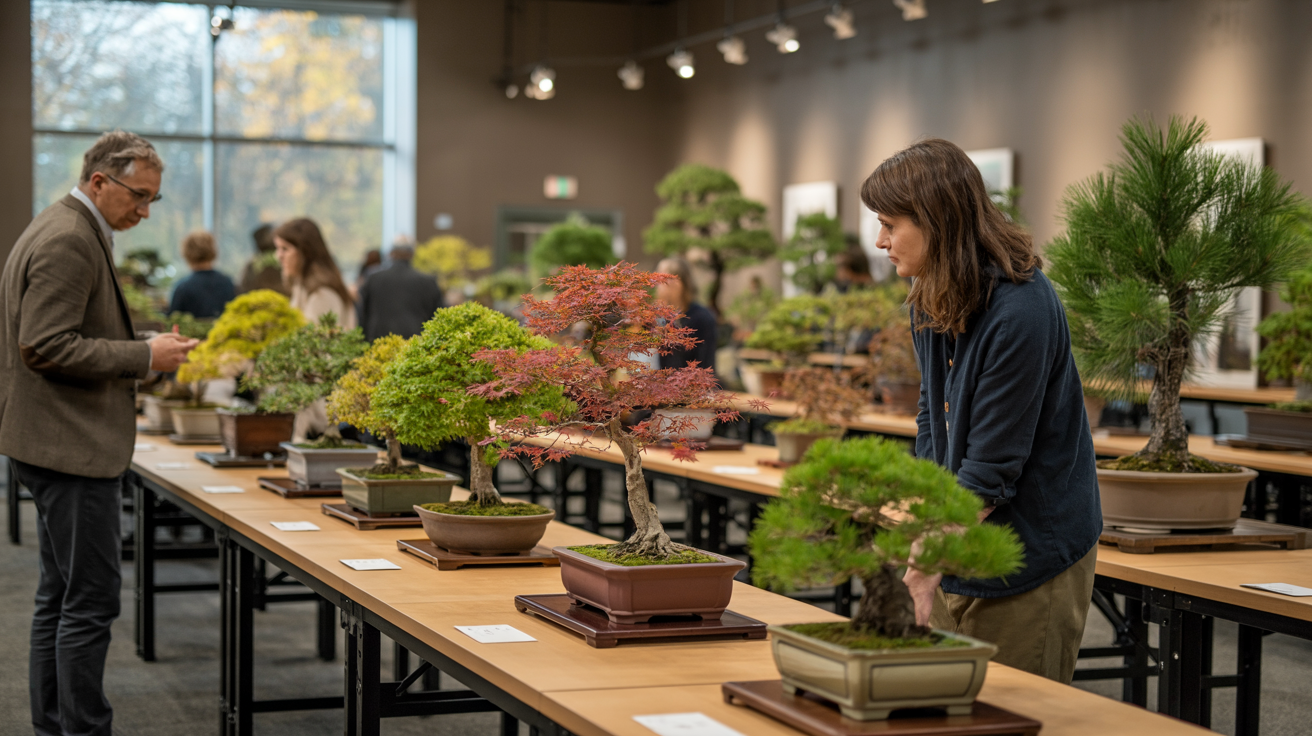
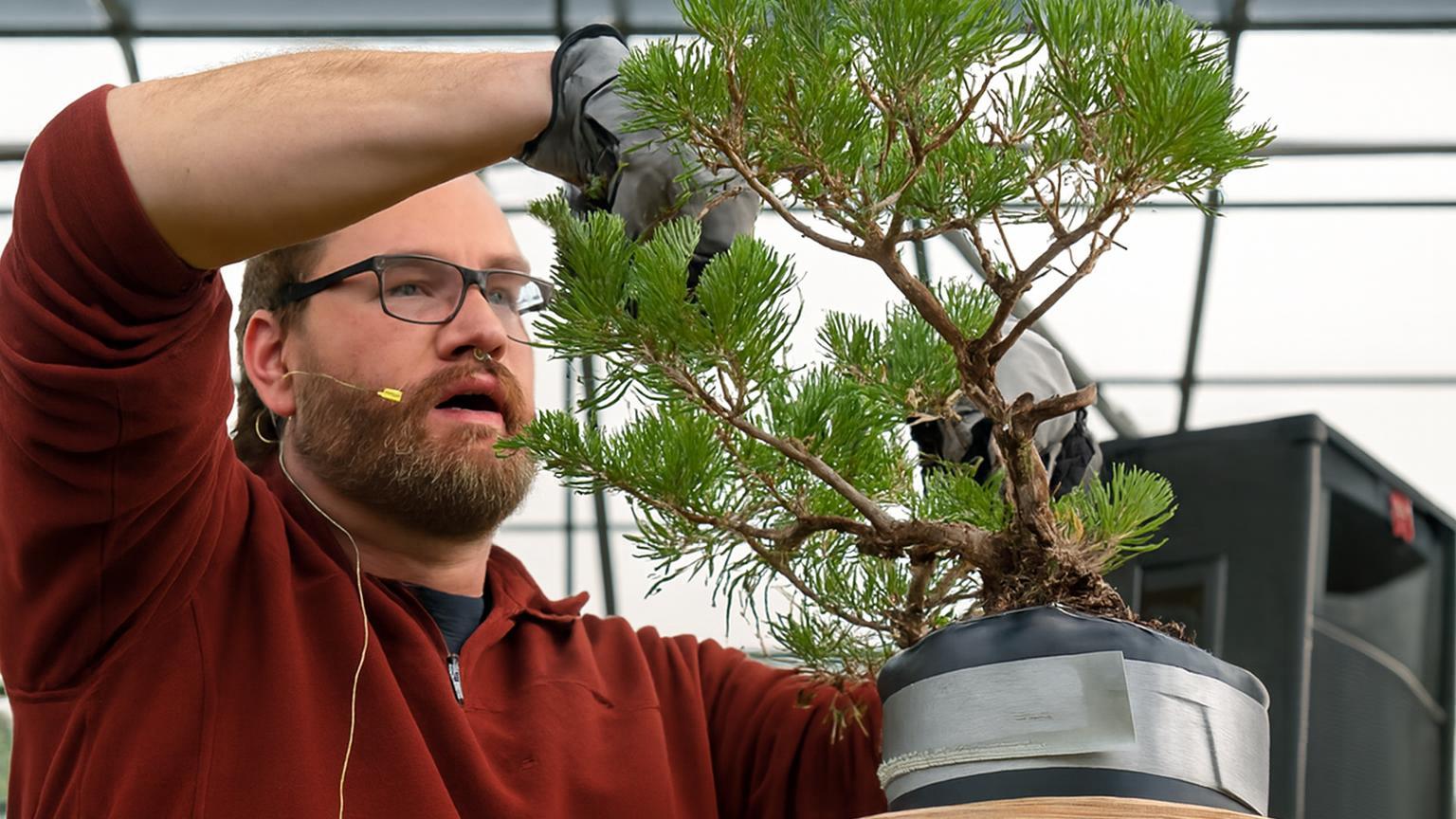
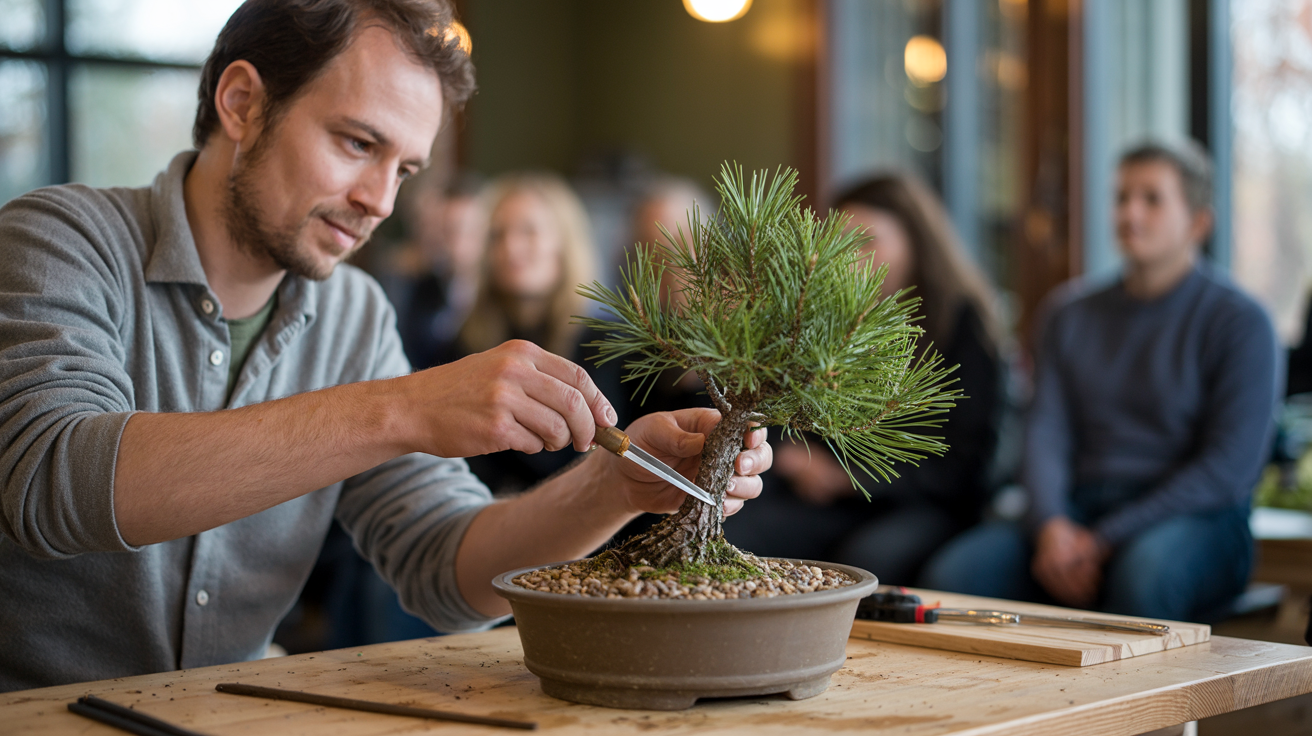
Public styling demonstrations, especially free ones, remain one of the most efficient routes into hands-on bonsai knowledge for newcomers. Watching an experienced hand make real-time decisions about a specific tree — this branch stays, that one goes, and here is exactly why — compresses years of trial and error. The lodgepole pine club demo reported by the Ledger Dispatch is a reminder that these grassroots events are where species like Pinus contorta get their moment — not in glossy international exhibitions, but in local halls with folding chairs and curious beginners asking the right questions.
For a broader argument about why showing up to these community events compounds your development as a grower, we’d point you toward our own piece on Why Fall Bonsai Shows Matter More Than You Think — And What Most Growers Miss by Not Attending.
Our Take
The shift toward styling native North American conifers in club settings is not nostalgia or novelty — it is a practical correction. Species like lodgepole pine are better suited to local soils, local climates, and local collecting opportunities than many imported favourites. We would argue that any grower west of the Rockies who has not seriously tried Pinus contorta is leaving one of their most accessible options on the table.
Actionable takeaway: If you have access to a nursery-grown or collected lodgepole pine this spring, resist the urge to apply Japanese pine technique wholesale. Mark your calendar for early spring candle selection — remove the dominant central candle before it extends beyond two centimetres, and let the tree dictate the pace from there.
By Redazione Bonsai World
Article researched and written with AI assistance and reviewed by the Bonsai World editorial team.