
The Shinogi Edge: Why the Geometry of Your Scissors Matters More Than You Think
We spend enormous amounts of time debating soil mixes, seasonal timing, and the merits of one fertiliser over another. What we almost never talk about — seriously, technically, with the precision the topic deserves — is the internal geometry of a bonsai scissor blade. That oversight costs growers more clean cuts than almost any other factor, and it is time we addressed it directly.
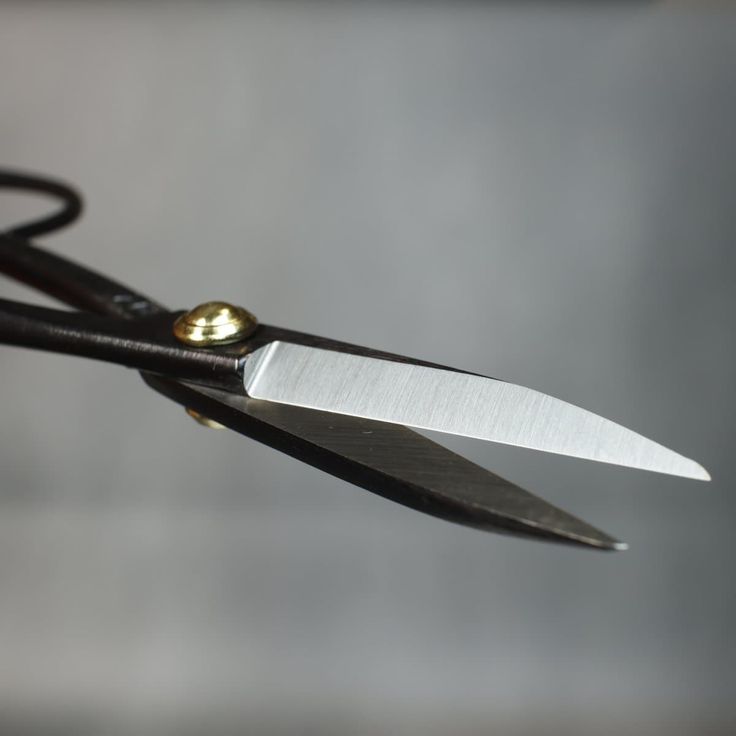
The recent attention around Kaneshin’s No.841C stainless steel trimming scissors, a 190mm large-format shear featuring a shinogi ridge, has brought a genuinely important structural concept back into conversation. We think this is the right moment to explain what that feature actually does — and why most introductory guides completely ignore it.
What a Shinogi Is, and Why It Changes Everything
A shinogi is a longitudinal ridge ground into the flat face of a blade, borrowed directly from Japanese sword-making tradition. In a scissor blade, it creates a subtle hollow or bevel behind the cutting edge that reduces the surface area pressing against plant tissue during a cut. The practical result is less lateral compression on cells adjacent to the cut site — which matters enormously when you are trimming the ramified twigs of a Acer palmatum in late autumn, or shortening new candles on a Pinus thunbergii in early summer.
Most beginner guides — and even many intermediate ones — describe bonsai scissors simply as “sharp” or “not sharp.” That binary misses the point entirely. A blade can be acutely sharp yet still crush rather than sever if its geometry is wrong. Crushed cells at a cut site brown more aggressively, invite fungal entry, and in fine-branched deciduous species like Zelkova serrata can set back ramification development by an entire growing season.
Large Format Matters for Specific Work
The 190mm length of the No.841C is not merely a size preference. Longer-handled scissors increase mechanical advantage, which means less grip pressure is needed to complete a cut cleanly. When working on lignified growth — secondary branches on an older Juniperus chinensis, for instance, or the thickened shoot bases on a mature Ficus retusa — that reduced grip pressure translates directly into better blade control and a cleaner exit angle from the cut.
Our view is that the industry habit of recommending one universal scissor for all tasks is genuinely bad advice. A short 155mm scissor suited to delicate work on Serissa japonica or Carmona retusa is the wrong tool when you move to late-winter structural trimming on a collected Pinus sylvestris. Matching scissor length and blade geometry to the specific task is not fussiness — it is technique.
One Concrete Technique: The Two-Stage Autumn Cut
When trimming Acer palmatum after leaf-fall in October or November, we recommend a deliberate two-stage approach with a shinogi-ground scissor. First, position the blade so the hollow face is oriented toward the bud you intend to keep. Second, complete the cut in a single, unhesitating close of the hand — no sawing, no repositioning mid-cut. The shinogi geometry does the work of deflecting compressed tissue away from the retained bud. The result is a cleaner callus and faster bud activation the following spring.
We have written at length about why scissor selection deserves far more rigorous attention than it typically receives — if this topic interests you, our related piece The Tool You’re Probably Using Wrong: A Case for Taking Bonsai Shears Seriously goes deeper into blade mechanics and common selection errors.
Our Take
Shinogi geometry is not a marketing flourish inherited from sword culture for aesthetic reasons. It is a functional design choice with measurable consequences for cut quality and tree health. We would argue that for anyone working seriously with fine-branched deciduous species or multi-needle pines, a scissor without this feature is a compromise worth reconsidering.
Actionable Takeaway
Today, before your next trimming session, hold your current scissors up and examine the flat face of each blade. If it is entirely flat — no bevel, no ridge — you are almost certainly generating more lateral tissue compression than necessary. Consider whether a shinogi-ground alternative is appropriate for the species you work with most. The tool information that prompted this discussion is available via Avigliano News and is worth reviewing if you are evaluating the Kaneshin range specifically.
By Redazione Bonsai World
Article researched and written with AI assistance and reviewed by the Bonsai World editorial team.