

What a Bioinformatics Algorithm Named “Bonsai” Teaches Us About the Art of Seeing Structure Clearly
We will admit it freely: when a paper published in Nature Biotechnology on 21 August 2026 named its algorithm after our art form, the editorial team here at Bonsai World did a double take. The tool, developed by Daan H. de Groot, Sarah X. Morillo Leonardo, Mikhail Pachkov, Erik van Nimwegen and colleagues, uses tree-shaped mathematical representations to cut through the noise in single-cell genomic data — reconstructing the most likely branching relationships among thousands of biological objects without distorting their underlying structure. You can read the researchers’ own framing of it directly at the source. They named it Bonsai because, like the living art we practice, it is about reducing complexity to reveal essential form.
We find this worth sitting with — not as flattery, but as a genuine philosophical mirror. What the scientists are doing computationally, skilled bonsai practitioners have been doing by hand and eye for centuries: stripping away what obscures, preserving what reveals, and representing something vast in a form that can actually be understood.
The Problem Most Growers Overlook: Distortion in Miniaturisation
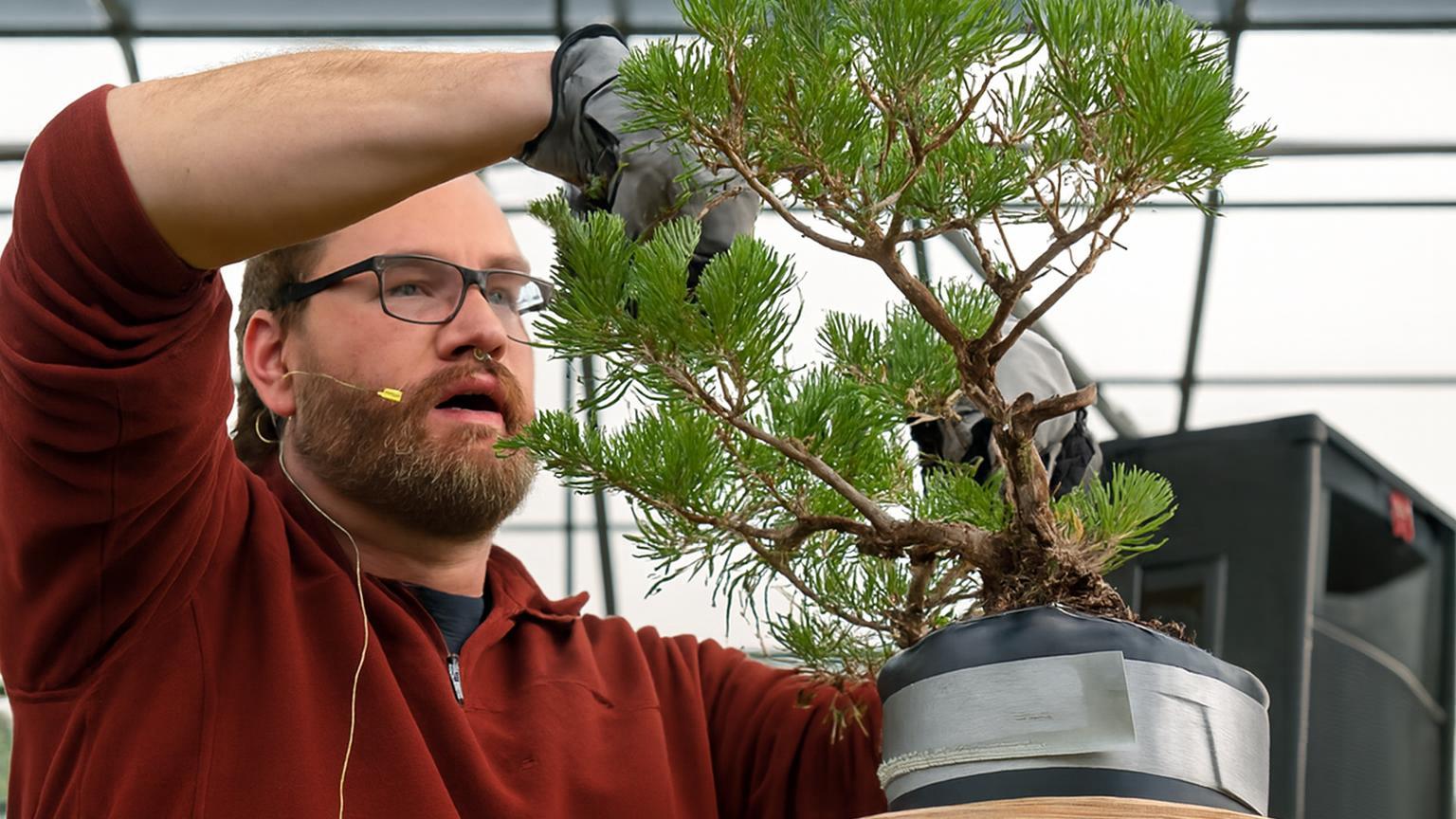
Here is where we think the analogy earns its keep, and where most beginner guides go badly wrong. The dominant mistake we see in introductory bonsai literature is treating miniaturisation as compression — the idea that you simply make a tree smaller and the beauty follows automatically. It does not. What you are actually doing, when you develop a bonsai seriously, is reconstructing the essential branching logic of a species, not shrinking a photograph of one.
This is precisely the distinction the Bonsai algorithm makes in data science. Current visualisation methods, the researchers note, distort the structure of data by forcing high-dimensional relationships into low-dimensional spaces carelessly. The algorithm instead reconstructs tree representations that preserve high-dimensional distances — it refuses to sacrifice accuracy for the sake of a tidy picture. In our view, that is exactly the standard we should hold ourselves to when shaping, say, a Juniperus chinensis or a Ficus retusa. The branching hierarchy must reflect the species’ actual growth logic, scaled faithfully, not squeezed arbitrarily.
One Concrete Technique: Reading Branch Hierarchy Before You Cut
We would argue that the single most underused pre-pruning practice among enthusiasts is what we call a structural audit — and the Bonsai algorithm’s approach gives us a useful frame for it. Before touching a pair of scissors, try this sequence on any deciduous species such as Acer buergerianum (trident maple) during late winter dormancy, when the branch architecture is fully visible:
- Identify your primary branches — those that define the first tier of movement out from the trunk. Mark them mentally or with small clips of florist’s wire.
- Identify which secondary branches emerge from each primary, and ask honestly whether each one moves in a direction that reinforces or contradicts the primary’s line.
- Remove any branch that introduces a redundant direction — one that essentially duplicates a line already present at that tier — before removing anything for size reasons alone.
- Only after hierarchy is clarified, address length and ramification.
The point is to reconstruct the tree’s essential structure before imposing your aesthetic on it. Distortion enters the moment we prune for appearance without first reading the underlying branching logic.
Our Take
The fact that a genomics research team independently landed on the bonsai metaphor to describe distortion-free structural clarity is, in our view, a quiet validation of something practitioners already know intuitively: the tree form is one of nature’s most efficient ways to organise complex relationships. Urban growers navigating space constraints face this same challenge of representing something large and structurally complex in a small container — a theme we explored in depth in our piece on The 47-Year-Old Banyan in a Tub: What Bangladesh’s Bonsai Boom Tells Us About Urban Growers Everywhere.
The researchers’ algorithm, notably, has no tunable parameters — it finds the correct structure without the user manually adjusting settings to get a pleasing result. There is a lesson there too. The best bonsai development decisions are not about forcing a pleasing silhouette; they emerge from honest reading of what the tree’s structure already wants to be.
Actionable Takeaway
This week, before your next pruning session on any broadleaf species, spend ten minutes sketching the existing branch hierarchy on paper — primary, secondary, tertiary. Cut nothing until that map is in front of you. You will find, almost immediately, that at least one branch you were planning to keep belongs to a tier that already has adequate representation, and at least one you planned to remove is actually load-bearing to the structural logic. That audit is your distortion-free visualisation pass. Run it every time.
By Redazione Bonsai World
Article researched and written with AI assistance and reviewed by the Bonsai World editorial team.