
Why Winter Pruning Decisions Define the Next Five Years of Your Tree
Every January, bonsai growers face the same fork in the road: do you touch the tree now, or wait? Most hobbyists default to waiting, reasoning that a dormant tree is a resting tree, and a resting tree should be left alone. We think that reasoning is half-right at best — and getting the other half wrong can cost you years of development.
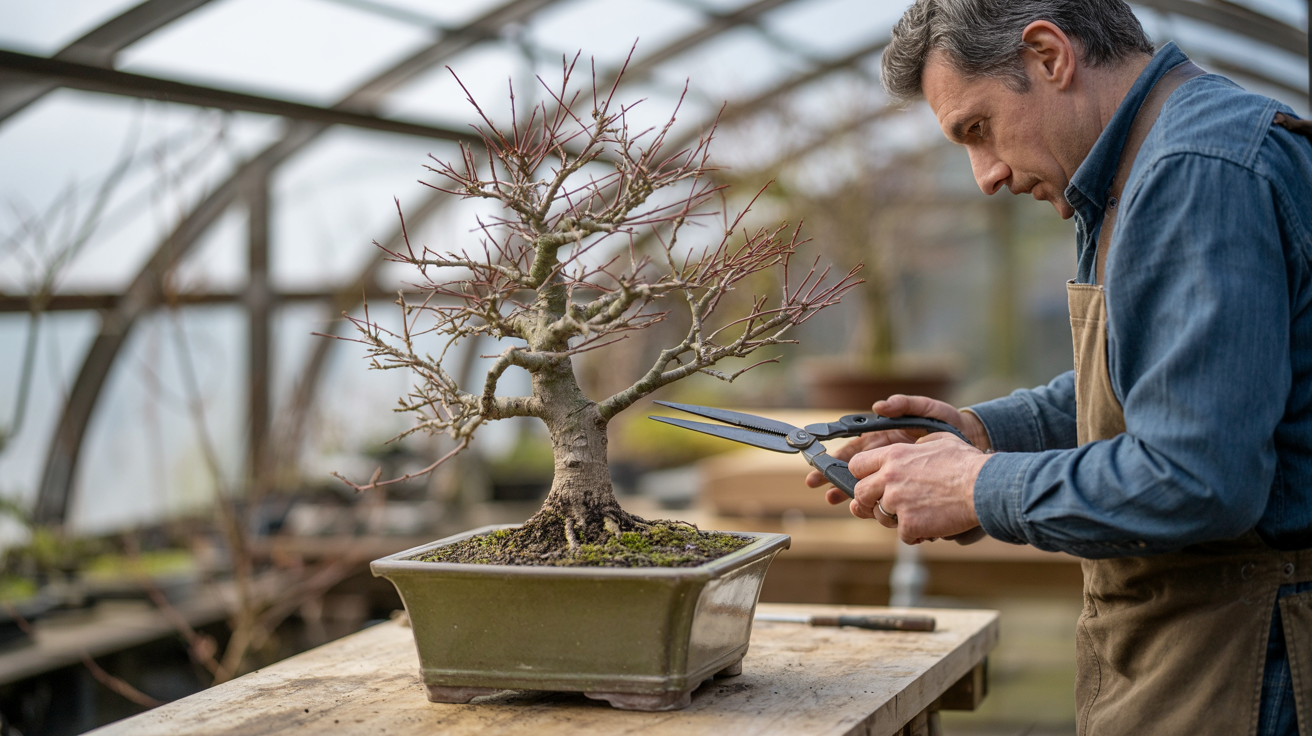
The winter and early spring window, roughly January through February in temperate climates, is not simply dead time between growing seasons. For many deciduous and coniferous species, it is the single most structurally honest moment of the year. Leaves are gone, ramification is fully visible, and the tree cannot hide its faults behind foliage. If you are working with Zelkova serrata (Japanese grey-bark elm), Acer palmatum (Japanese maple), or any Carpinus species, this is the period when you can actually see whether your branch structure is building fine twigs or simply thickening a handful of dominant laterals.
What Most Guides Get Wrong About Dormant-Season Work
The widespread advice to “prune in late autumn after leaf drop” ignores something important: cuts made in November and December on maples, in particular, are exposed to the maximum duration of winter cold before callus tissue can form. A cut made in late January or very early February on a containerised Acer palmatum in a frost-protected but unheated greenhouse will begin generating callus far sooner, because vascular activity picks up weeks before bud burst. The timing advantage is narrow — perhaps a three-week window — but it is real, and the difference in wound closure speed over a full growing season is visible by the following autumn.
We would also argue that far too many guides treat winter pruning as a separate discipline from wiring, when in reality the two are inseparable at this stage. Wiring a branch before you decide which shoots to remove leads to wasted effort. The correct sequence matters.
A Concrete Winter Structural Pruning Sequence
- Step 1: In late January, bring the dormant tree into good light and rotate it on the bench. Identify the front definitively before touching anything.
- Step 2: Remove any crossing branches, downward-growing shoots, and any lateral that has thickened to more than one-third the diameter of its parent branch. Do this with sharp, concave cutters and seal cuts over 4 mm immediately with cut paste.
- Step 3: Only after all removal cuts are made, begin wiring remaining branches, working from the trunk outward, using aluminium wire sized at roughly one-third the branch diameter.
- Step 4: Reposition the tree outdoors or back in its winter shelter before nighttime temperatures drop below -3 °C if the pot is shallow, as frozen root masses in thin containers are a genuine risk even for hardy species.
Why the Species You Choose Changes Everything
This sequence works well for Zelkova and Carpinus but needs modification for pines. Pinus thunbergii (Japanese black pine) and Pinus sylvestris (Scots pine) should not receive heavy structural pruning in January in most of northern Europe or the northern United States — that work belongs to autumn for back-budding leverage. Conflating the timing rules across species families is one of the most consistent errors we see among growers moving from beginner to intermediate level.
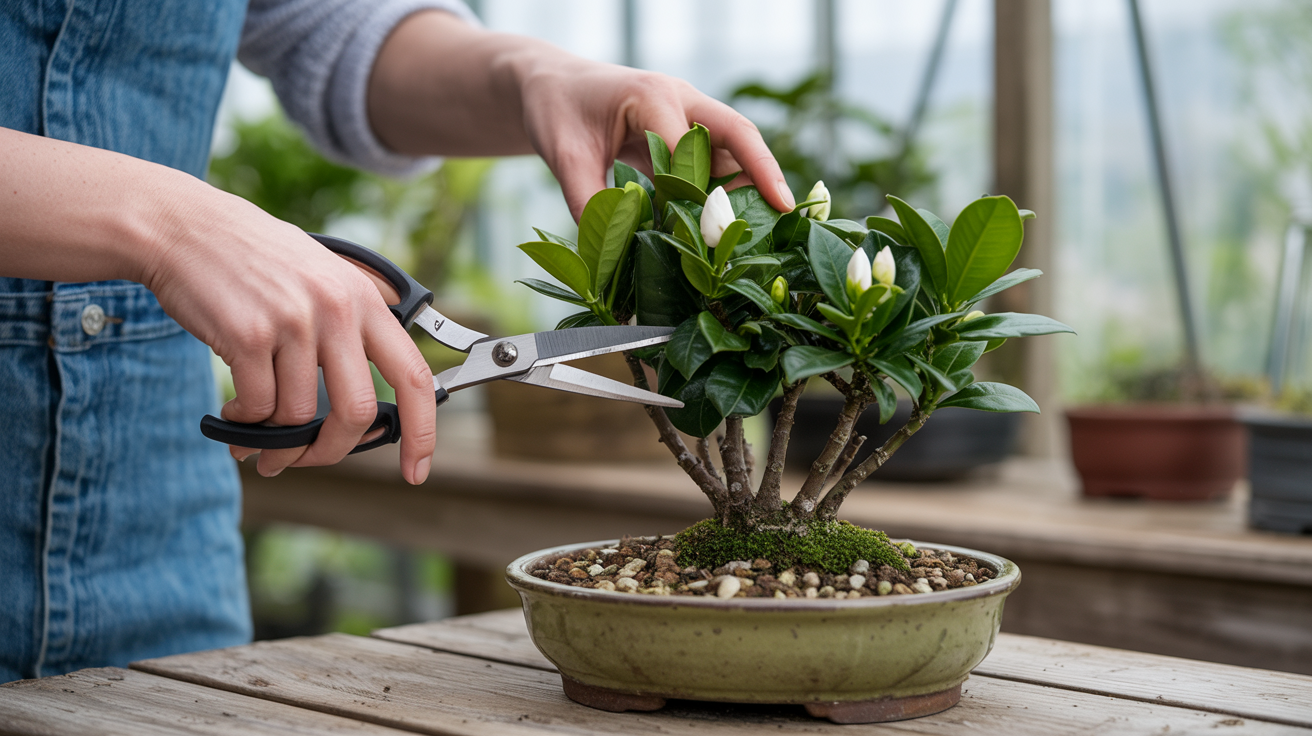
If you are exploring flowering species and their distinct seasonal rhythms, our piece on Why the Dwarf Gardenia Deserves a Serious Place in Your Bonsai Collection covers how post-bloom pruning timing works quite differently from the dormant-season logic outlined here.
Our take: Winter is not a pause — it is the season where structural honesty is possible and where your decisions compound over the next five years of growth. Use it deliberately.
Actionable takeaway: This week, bring your dormant deciduous trees into clear light, photograph the branch structure from the front, and mark any crossing or bar branches with a small piece of tape before making a single cut. Decide before you prune.
Source: Bonsai Focus 2016-1, January/February issue
By Redazione Bonsai World
Article researched and written with AI assistance and reviewed by the Bonsai World editorial team.