
The Humble Tweezer: Why Precision Hand Tools Deserve More Respect in Your Bonsai Practice
We spend considerable column inches discussing wiring gauges, soil composition, and the merits of Akadama versus pumice blends. Yet one category of tooling consistently gets treated as an afterthought in most bonsai guides: the slender, multipurpose hand tool — and specifically, the curved-tip tweezer with spatula. We think this is a genuine blind spot, and one worth correcting.
What Most Beginners Miss About Tweezers
The standard advice you will find in introductory bonsai literature goes something like this: buy a basic toolkit, which will include scissors, a concave cutter, and perhaps a root hook. Tweezers, if mentioned at all, are listed almost parenthetically, often described simply as useful “for removing debris.” That framing sells the tool dramatically short.
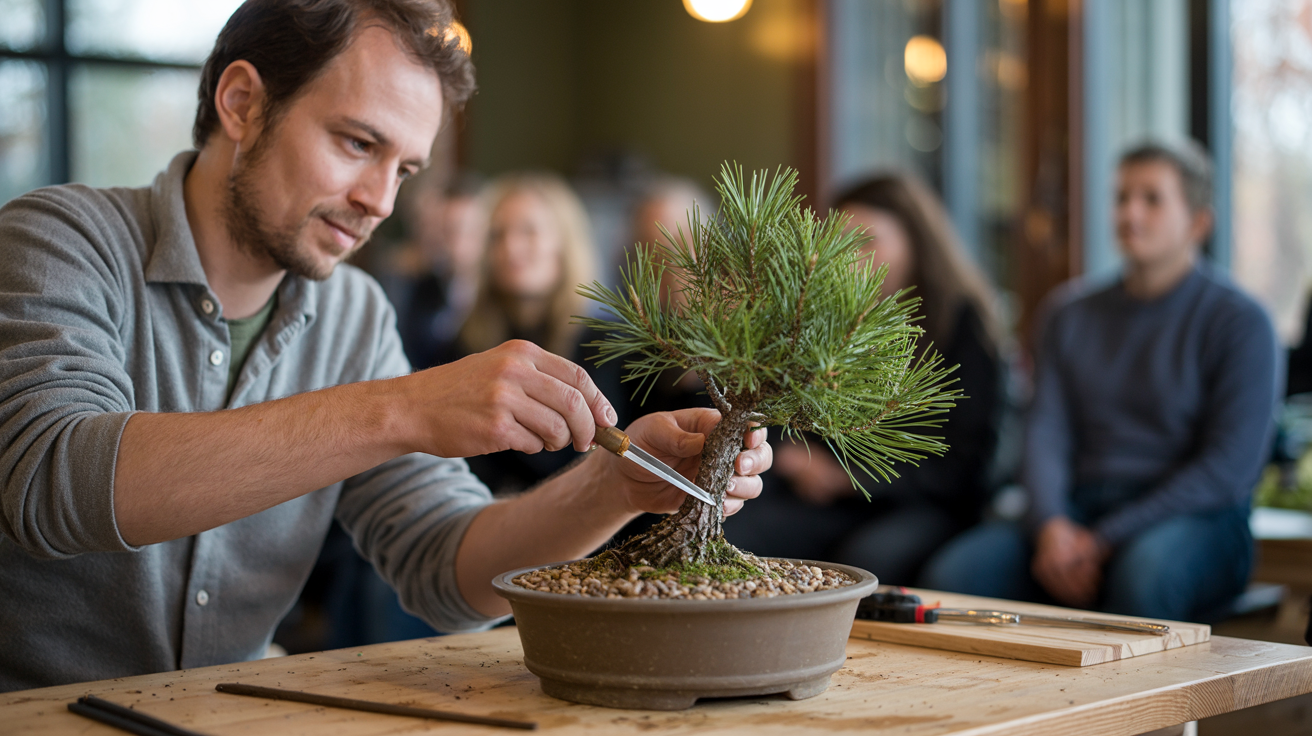
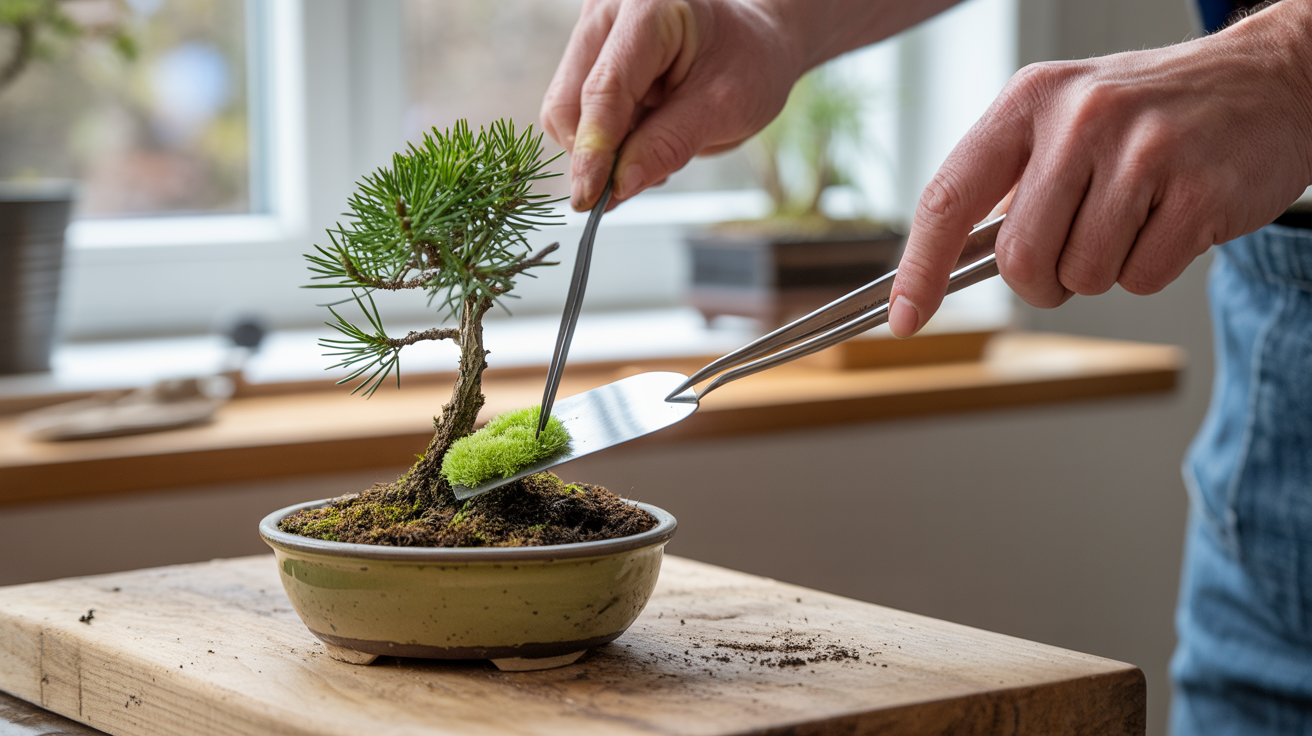
A well-made stainless steel tweezer — particularly the curved-tip style common in Japanese professional kits — is genuinely a dual-purpose instrument when it incorporates a spatula end. The spatula is not decorative. It is what allows you to lift, reposition, and press moss sheets without crushing the delicate rhizoids that anchor them to soil. Crushing those rhizoids is precisely why moss installations on freshly repotted trees so often fail within the first two weeks: the grower used their fingers, or the wrong end of a tool, and severed the living connection before it was established.
Moss Work Is More Technical Than Most Guides Admit
In our view, moss management is one of the most undertheorised aspects of bonsai practice in English-language resources. Consider a typical spring repotting scenario for a Juniperus procumbens or a Prunus mume. After root work and fresh soil placement, growers want to re-establish the moss carpet quickly — both for aesthetic reasons and because a moss layer genuinely helps regulate surface moisture during the critical root-recovery period. The mistake most guides encourage, even implicitly, is rushing this step with bare hands or blunt implements.
The correct approach, using a curved-tip tweezer with spatula, is as follows:
- Pre-moisten your moss sections lightly before handling. Dry moss tears; damp moss flexes.
- Use the curved tips to grip the moss at its perimeter edge, never mid-sheet, to avoid compressing the body of the mat.
- Set the section into position, then use the flat spatula end to press firmly but evenly across the surface, mimicking the gentle pressure of a thumb without the heat or inconsistency of skin contact.
- Work from the base of the trunk outward in overlapping sections, so each new piece slightly underlaps the previous one — this prevents gap formation as the moss settles and contracts during its first dry cycle.
This technique applies equally whether you are working with Hypnum sheet moss, Polytrichum cushion moss, or the finer-textured varieties favoured for accent plantings in Ulmus parvifolia forest compositions.
The Weeding Application Is Equally Undervalued
Curved-tip tweezers shine during the late winter weeding window — roughly February through early March in temperate climates — when unwanted seedlings begin germinating in bonsai soil before the tree itself has broken dormancy. At this stage, a standard straight tweezer struggles to reach beneath the soil surface at the precise angle needed to extract a tap-rooted weed without disturbing adjacent fine roots. The curve solves this almost automatically, allowing a low-angle approach that a straight tool simply cannot replicate.
Our earlier piece on collected Yamazakura material touches on how vulnerable the root zone of recently established trees can be — the same logic applies here. Every unnecessary disturbance to young or stressed roots is a cost worth minimising with the right tool.
Our Take
We would argue that a quality curved-tip tweezer with spatula, made from corrosion-resistant stainless steel and sized around 210 mm for adequate hand clearance, should sit in the same tier of priority as your bud scissors. It is not a luxury item; it is a precision instrument that directly affects the success rate of two of the most time-sensitive operations in bonsai care. You can read more about tools in this category via the source coverage at umlconnector.com.
Actionable Takeaway
Before your next repotting session, test your current tweezer against this single criterion: can you hold a damp moss section by its edge and rotate it 180 degrees without it tearing or slipping? If not, the tip geometry or the grip texture of your tool is working against you. That is the concrete benchmark to apply today — and the simplest reason to reconsider what your hand tool drawer actually contains.
By Redazione Bonsai World
Article researched and written with AI assistance and reviewed by the Bonsai World editorial team.