
Why Regional Bonsai Shows Are the Most Underrated Growth Tool in the Hobby
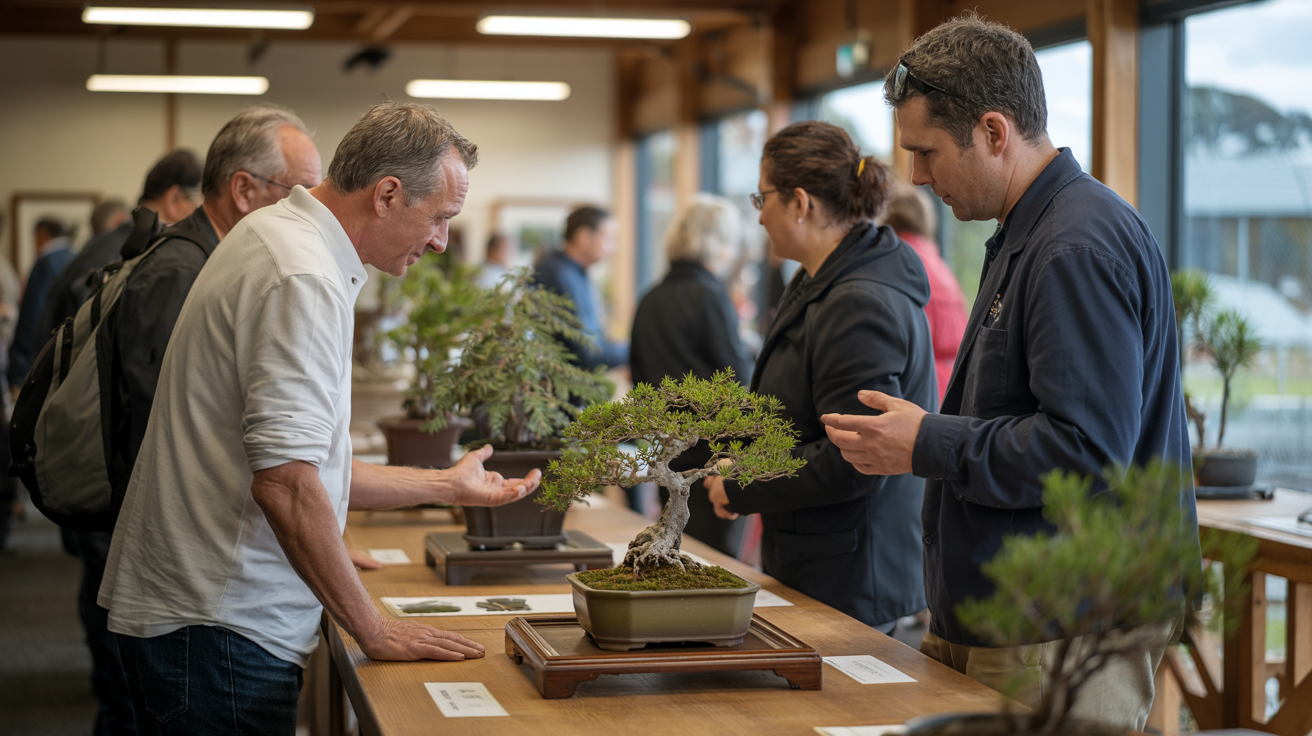
Every spring and autumn, bonsai clubs across the Southern Hemisphere quietly pull off something remarkable: they coax non-practitioners through the door of a community hall or exhibition space, place them two feet from a fifty-year-old Juniperus chinensis or a flowering Cotoneaster horizontalis, and watch something shift in those people’s faces. The Hamilton Bonsai Show in Waikato is one such event, and coverage in the Waikato Times confirming strong public turnout reinforces what we at Bonsai World have believed for years: the real engine of this art form is not the internet tutorial or the premium workshop. It is the local show, in person, where trees and people occupy the same room.
We want to make an argument that most hobby guides fumble entirely: regional exhibitions are not merely display events. They are diagnostic tools. When you place your Acer palmatum among twenty others in a judged or semi-judged environment, every weakness in your nebari development, every misjudged apex, every branch that you convinced yourself read as movement — all of it becomes visible in a way that no mirror in your garden ever achieves.
What Most Guides Get Wrong About Show Preparation
The standard advice is to start preparing your exhibition tree six to eight weeks out. In our view, that framing is backwards and produces scrambled results. Six weeks before a late-autumn show in temperate New Zealand climates — roughly late April — is still within the window when Acer palmatum varieties are hardening off and any structural wiring applied then risks deep scarring as lignification accelerates. The tree is not pausing; it is actively changing, and cosmetic interventions at that stage tend to look exactly like what they are.
What actually works is a rolling two-season discipline. Use the spring flush — September to October in the Southern Hemisphere — to establish your structural silhouette through selective pruning and light copper wiring on secondary branches no thicker than four millimetres. Then leave the tree largely alone through summer, allowing ramification to fill naturally. By the time you are three weeks from your exhibition date in autumn, your intervention is limited to removing crossing twigs, cleaning deadwood, and choosing the correct accent plant and pot combination. The tree looks settled because it has been allowed to settle.
The Species Conversation Nobody Is Having
Shows like Hamilton’s also quietly surface a conversation that online communities tend to flatten: which species actually thrive under regional conditions, rather than which species appear on aspirational Pinterest boards. In the Waikato’s humid, relatively mild climate, Ficus microcarpa and native species such as Leptospermum scoparium — mānuka — carry an inherent advantage over temperate continental species that many growers import at significant cost and then struggle to exhibit in peak condition.
We would argue that celebrating locally adapted species at regional shows is not a compromise. It is the more sophisticated choice, and it produces trees with genuine vigour on the display bench rather than trees that are merely surviving.
Our Take
The surge of interest documented at Hamilton is not a novelty or a post-pandemic blip. It reflects a structural hunger for tactile, slow, purposeful craft in a distracted world. Clubs that understand this and programme their shows accordingly — with demonstration tables, approachable labelling, and entry-level workshops running concurrently — will convert browsers into practitioners far more effectively than any social media campaign. For a broader look at how institutional investment shapes the long-term health of the art form, we recommend reading When Science Meets Soil: Why Institutional Bonsai Programmes Matter More Than You Think.
Actionable Takeaway
- If you are in the Southern Hemisphere, audit one tree in your collection this week against a single criterion: does the front you have chosen reveal or conceal the base? Rotate the pot 45 degrees in each direction and photograph each position. You may find your exhibition front has been wrong for years — and a show environment, even a small regional one, is exactly where that discovery happens.
By Redazione Bonsai World
Article researched and written with AI assistance and reviewed by the Bonsai World editorial team.