
November 7, 1970. Brooklyn, New York. A celebrated Japanese juniper arrives at the Brooklyn Botanic Garden, carrying a history that few American visitors know.
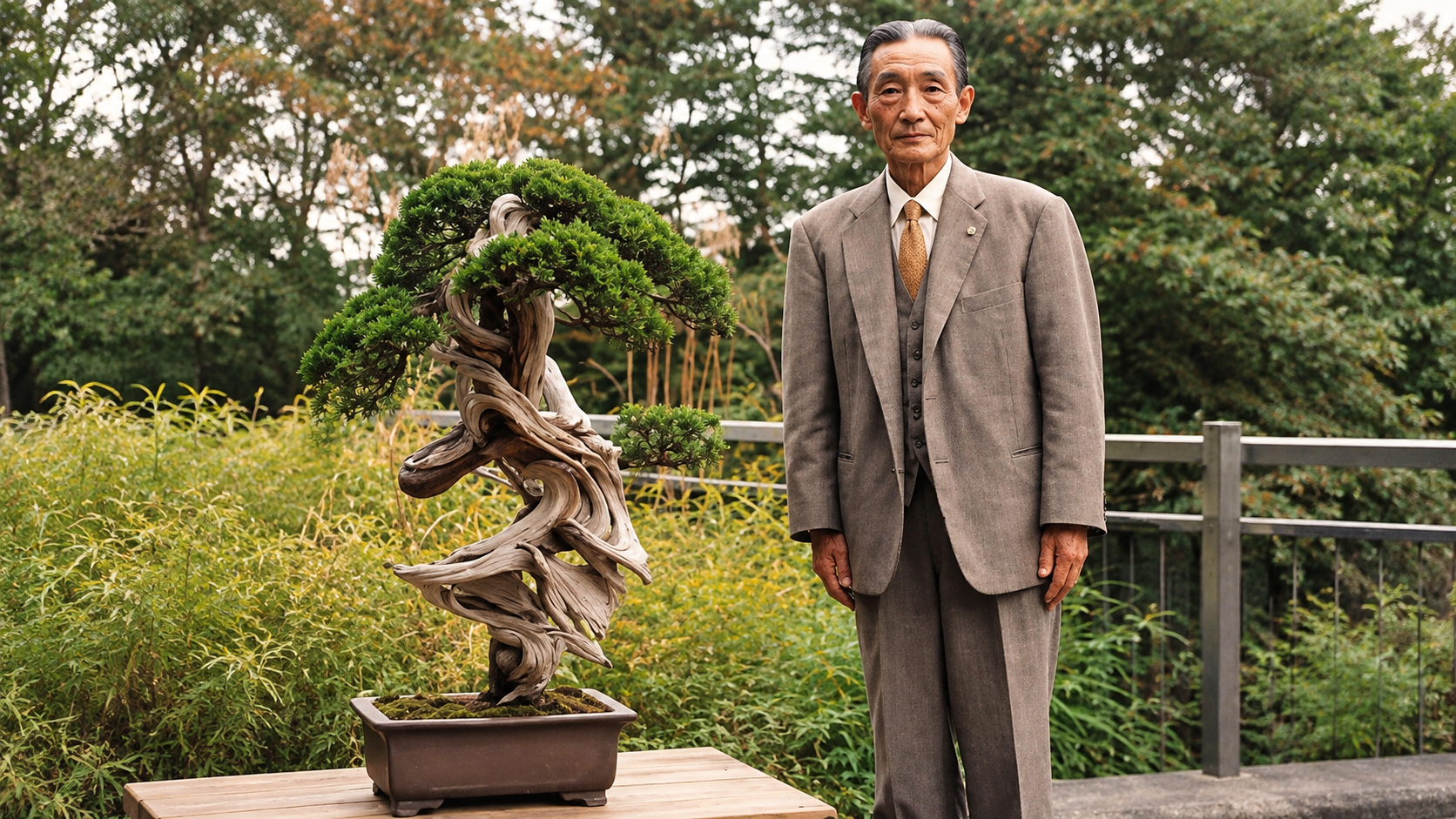
In the garden, a distant Japanese legend becomes an American responsibility. Its name is Fudo. Its twisted trunk looks less like a young tree than a fragment of an ancient mountain, shaped by wind, rock, and time.
Japanese collectors believed it was between six hundred and one thousand years old, though no one could establish its exact age. Around 1910, a collector named Tahei Suzuki reportedly found the juniper growing in the mountains of Japan. He brought it into the world of bonsai, where living trees are trained into miniature landscapes. Fudo was wired and shaped by a respected bonsai artist, Kinsaku Saida, and its unusual form soon made it exceptional even among rare specimens.
In 1929, Fudo appeared at a major bonsai exhibition and won first prize. Then it vanished from public view. Its owner, described in later accounts as a wealthy Japanese oil magnate, reportedly feared that repeated exhibitions could harm the tree. A special place was prepared for it inside his home, and for years the celebrated juniper remained out of sight. The silence gave it a name of its own: the Phantom Shimpaku.
Stories about the tree spread through the small world of bonsai, but photographs and first-hand sightings were scarce. Its reputation grew partly because so few people could see the living original, and because every gap in its history invited another question. After the Second World War, Fudo passed through new ownership. By the late 1960s, bonsai master Kyuzo Murata had acquired it.
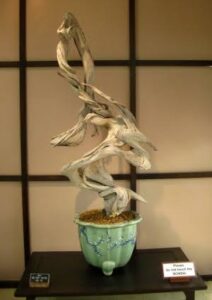
Murata wanted to help introduce Japan’s finest bonsai to audiences overseas, and eventually agreed to part with this historic tree. In 1970, Fudo was sent to the Brooklyn Botanic Garden. The arrival was a landmark for American bonsai enthusiasts. But the story took a turn no one wanted. The tree died within its first year in America. Accounts of its death helped prompt closer attention to how historic bonsai were transported and cared for, including trees later sent from Japan as gifts.
The living mystery was over, but Fudo did not entirely disappear. Its preserved deadwood, the weathered trunk that had made it famous, remained as a physical record of the tree. At the Brooklyn Botanic Garden, visitors could still encounter the remains of a bonsai once hidden from the world. Fudo had survived mountains, collectors, secrecy, and war. It crossed an ocean, only to die far from the landscape where it began.
The Phantom Juniper was gone, but its skeleton remained.