
Why Local Club Shows Are the Most Underrated Force in British Bonsai
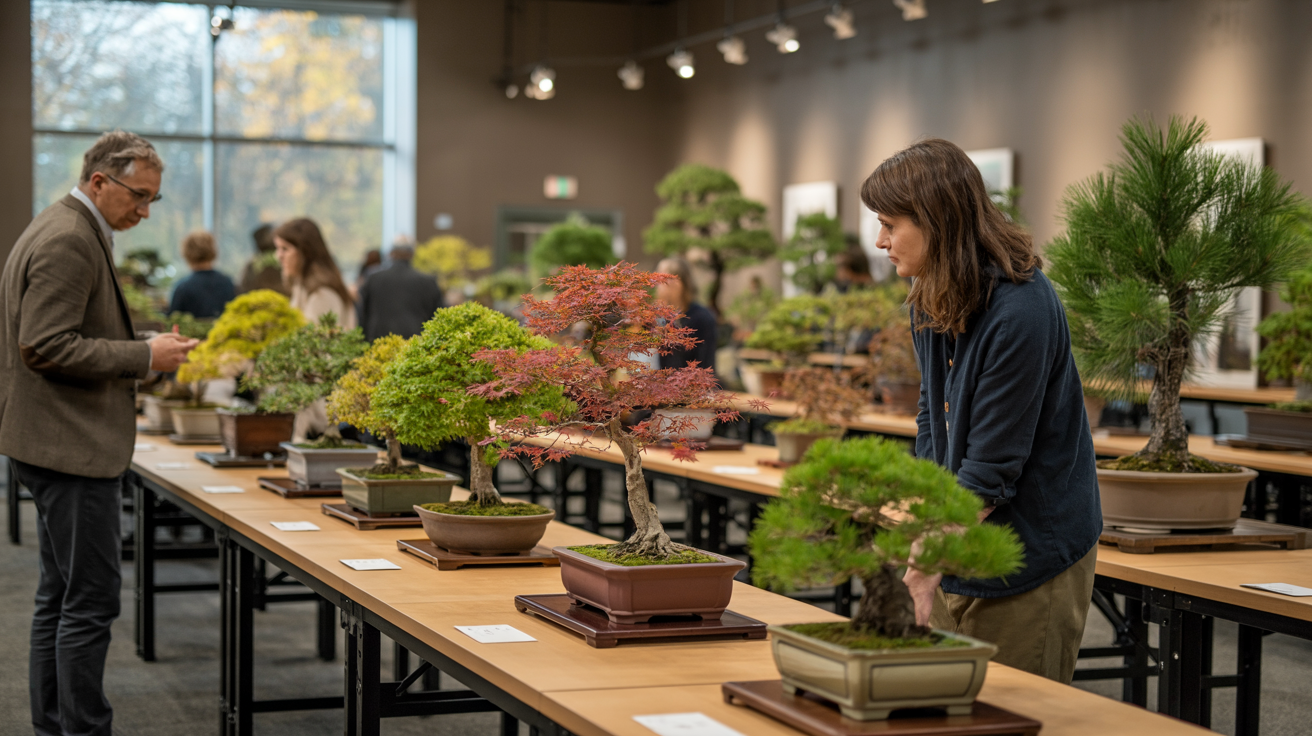
Every August, somewhere in England, a village hall or park pavilion fills quietly with extraordinary trees. Visitors lean in close, read handwritten labels, and ask questions they’d never dare type into a search engine. No algorithm delivers what that moment does. The Bedfordshire Bonsai Society’s recent annual exhibition at Stockwood Park in Luton — reported by Luton Today — drew nearly 40 members’ trees and, crucially, two new members on the spot. That second number matters far more than people realise, and we think the wider bonsai community is sleeping on what regional exhibitions actually accomplish.
The Winning Tree and What It Tells Us
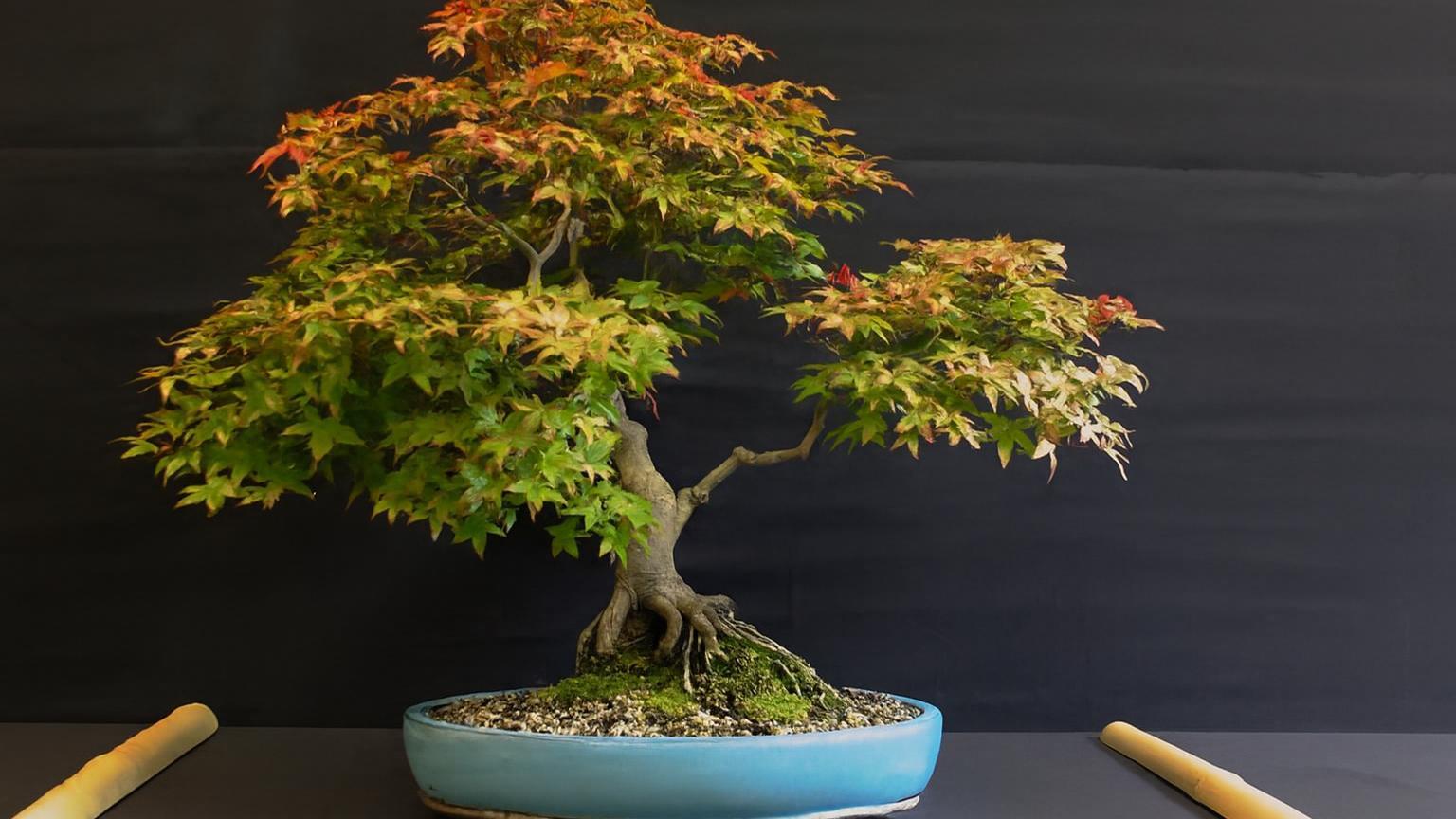
The show’s people’s-choice winner was an Acer palmatum ‘Deshojo’, a cultivar routinely mishandled by beginners because guides consistently understate how dramatically its seasonal colour behaviour should influence styling decisions. ‘Deshojo’ is not simply a “red maple for bonsai.” In early spring its new growth emerges a vivid crimson-scarlet; by midsummer, depending on sun exposure, those same leaves shift toward a deeper, bronzed green. By autumn they return to flame. This three-act colour performance is the whole point of the tree, and any styling that doesn’t account for it — specifically, any wiring done carelessly in late spring when the new flush is still tender — risks scarring the very foliage that makes the cultivar worth growing.
Most beginner guides tell you to wire maples “in late autumn or winter when leaves have dropped.” That is sound general advice. What they fail to specify is that Acer palmatum ‘Deshojo’ benefits enormously from a secondary defoliation in midsummer — around the third week of July in the UK’s climate — precisely to force a second flush of that vivid red growth in time for a September exhibition. The Stockwood Park show, held in early August, sat at exactly the right window to catch trees that had been managed this way.
What Most Guides Get Wrong About Exhibition-Ready Maples
In our view, the single most consistent error in popular bonsai guides is treating exhibition preparation as a presentation problem — pot choice, display table height, accent plants — rather than a horticultural one that begins months earlier. A ‘Deshojo’ shown in August should have had its midsummer defoliation no later than 20–25 July. Here is the sequence we’d recommend:
- Remove approximately 50–60% of the leaf mass selectively, prioritising large, coarse leaves at branch tips. Do not strip the tree entirely; that technique suits trident maple, not ‘Deshojo’.
- Follow immediately with a dilute balanced liquid feed (a 10-10-10 or equivalent at half strength), applied weekly for three weeks.
- Move the tree to 40–50% shade for the first ten days post-defoliation to prevent desiccation of the emerging buds.
- By the first week of August, new growth will have extended and the characteristic scarlet colouration will peak — timed precisely for an early-to-mid August show.
The trees displayed at Stockwood Park were voted on by both club members and visitors, with the winner announced at the club’s August meeting. That democratic judging model is something we’d argue more clubs should adopt; it forces exhibitors to think about legibility and emotional impact, not just technical refinement.
Our Take
Club Chairman Darren Jones noted that attendance at the Bedfordshire show has grown year on year. We’re not surprised. Regional shows democratise bonsai in a way that prestigious national exhibitions cannot. When someone walks into Stockwood Park and sees a ‘Deshojo’ small enough to fit on a kitchen windowsill and yet unmistakably a tree, the hobby stops being intimidating. The mame category — trees under four inches — deserves particular credit for that gateway effect.
The actionable takeaway you can apply today: if you own an Acer palmatum ‘Deshojo’ and missed this summer’s partial defoliation window, mark 15 July 2027 in your calendar now and plan your feeding schedule backwards from your target show date. That single calendar entry is worth more than any styling tool you could buy.
Related reading: From Ash to Bonsai: What the Ayalon Canada Park Olive Rescue Teaches Us About Working With Fire-Damaged Trees — a useful companion piece on how stress and recovery shape bonsai development in ways conventional care guides rarely address.
By Redazione Bonsai World
Article researched and written with AI assistance and reviewed by the Bonsai World editorial team.