
The Club Membership Most Bonsai Guides Tell You to Skip — And Why That’s a Mistake
We talk a great deal in this magazine about species selection, soil composition, and the timing of root work. What we discuss far less often — and what we believe deserves a direct, unambiguous argument — is this: the single most underrated accelerant in a bonsai practitioner’s development is joining a local club, and most introductory guides treat it as an optional afterthought. It is not. It is foundational, and the story of Dr. Ryan Wagner at Millersville University makes that case more clearly than almost any instructional manual could.
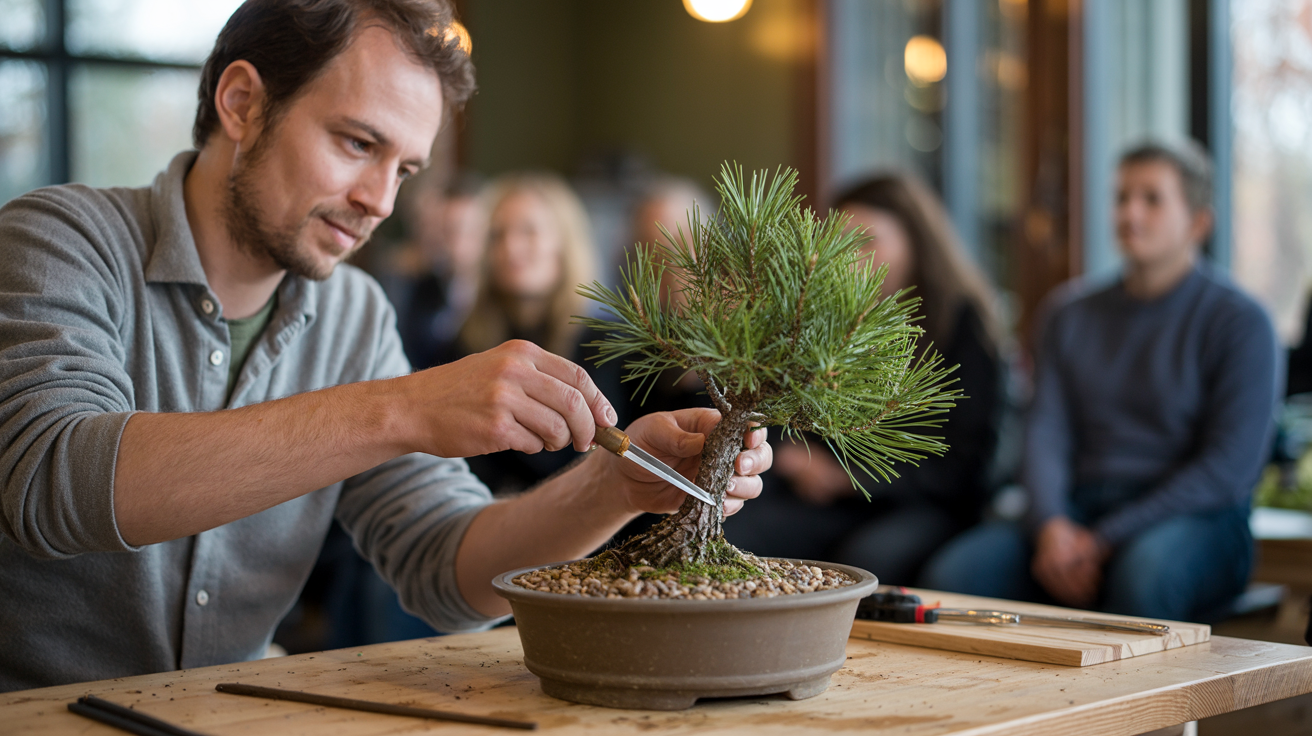
Wagner’s arc is instructive precisely because of where it stalled. He encountered bonsai as an undergraduate, attempted it, killed trees, and stepped back. Years of postdoctoral study in biology at Iowa State University gave him enough horticultural grounding to keep a dwarf Norway spruce — Picea abies ‘Pumila’ — alive, yet by his own account his aesthetic eye remained underdeveloped. Knowledge of plant physiology alone did not produce good bonsai. What changed his trajectory was moving to Lancaster, Pennsylvania, discovering the Lancaster Bonsai Society, and joining it. His skills then developed, in his words, “rapidly.” That word — rapidly — should stop every solitary practitioner in their tracks. A man with a doctoral background in botany called a community the thing that made him fast. That is the detail the original Millersville University profile surfaces quietly, and we think it deserves to be shouted.
What Most Guides Get Wrong About Patience
The bonsai world loves to invoke patience as a virtue, and rightly so — but most guides frame it passively, as though waiting is itself the practice. In our view, that framing is harmful. Patience in bonsai is not passive endurance; it is disciplined restraint applied at precise seasonal windows. There is a meaningful difference between the two, and collapsing them leads beginners to either overwork a tree out of restless impatience or neglect it under the mistaken impression that time alone is doing the work.
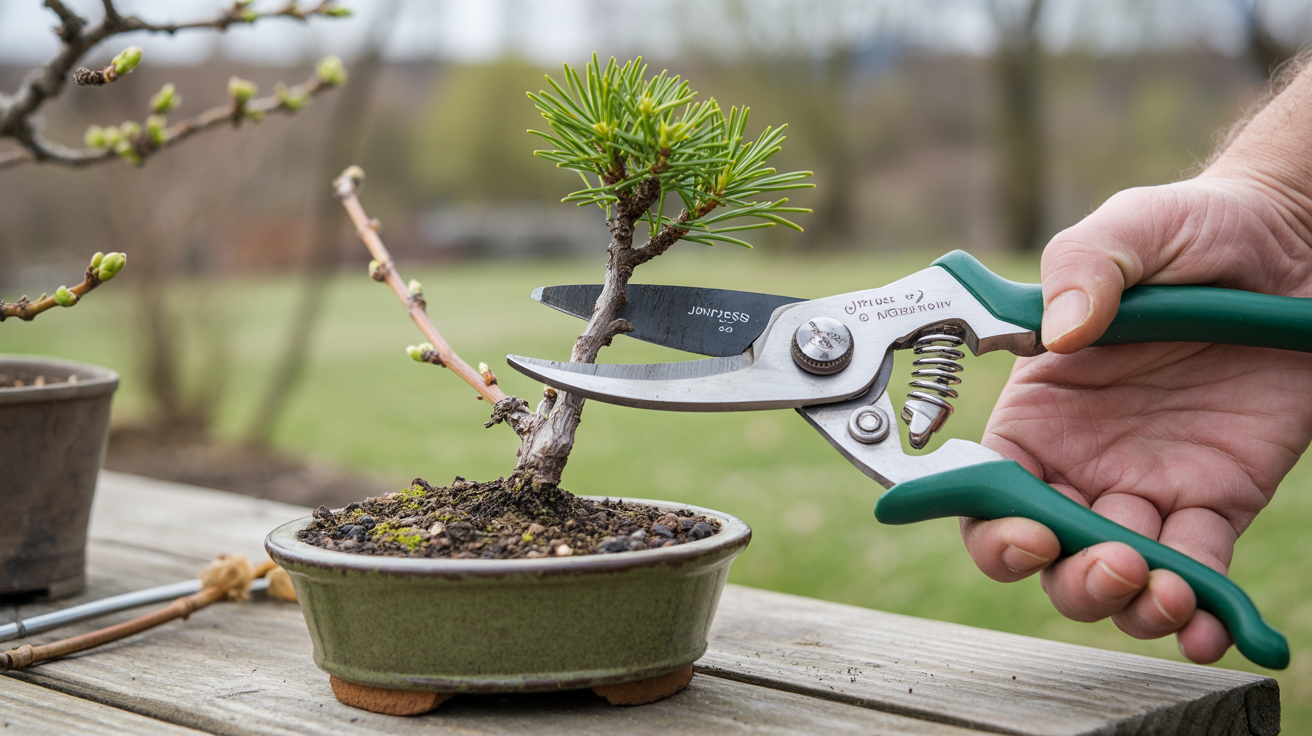
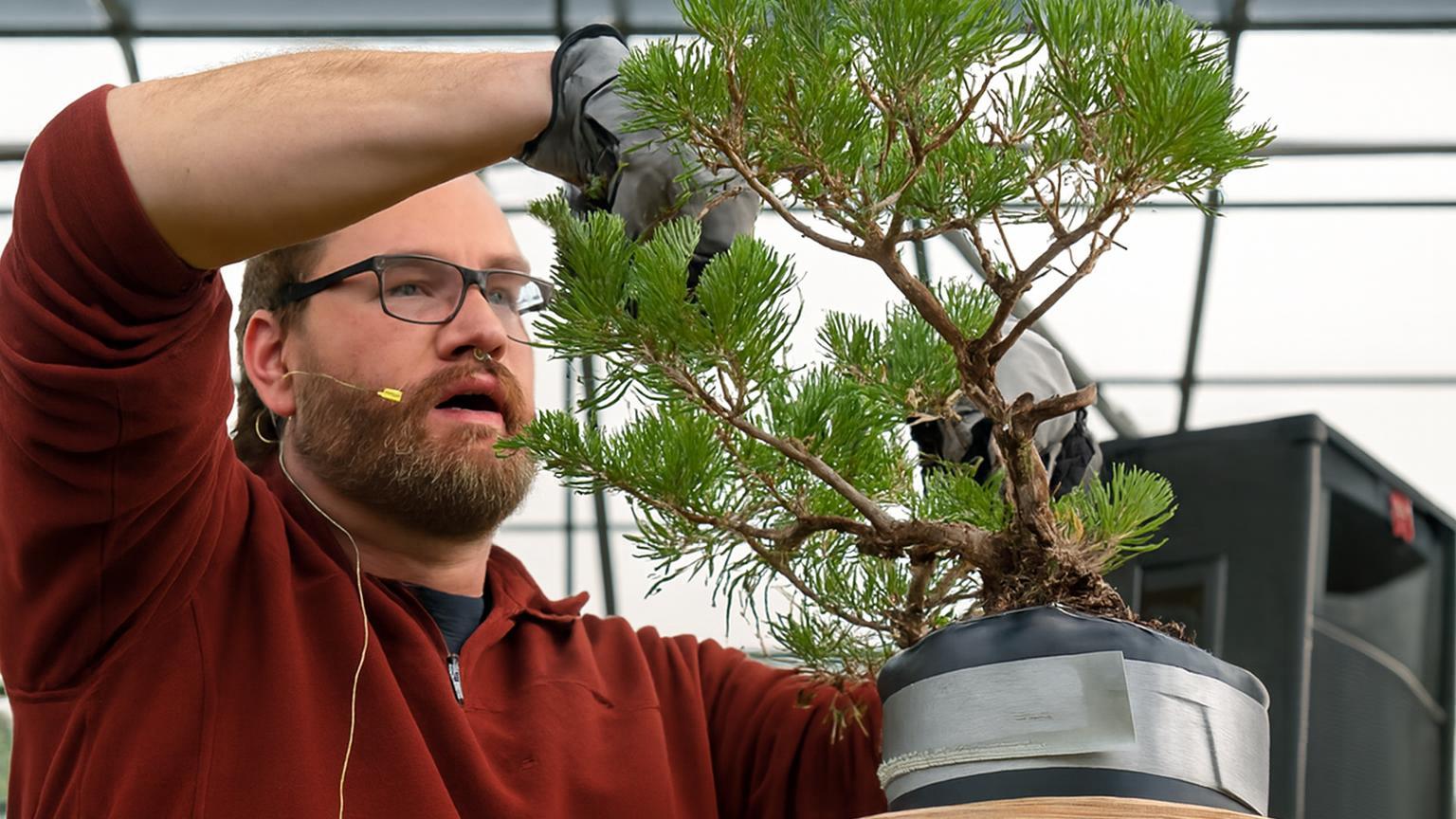
Take the Chinese juniper (Juniperus chinensis), the species Wagner is photographed working with at Millersville. On a young collected or nursery specimen, one of the most common errors we see is aggressive pruning in late summer, when the tree has already committed its energy reserves to hardening new growth. The correct window for primary structural pruning on a Chinese juniper is late winter to very early spring — before bud swell, when you can read the silhouette clearly and the tree has not yet mobilised sugars into the canopy. Remove one category of branches per session: first deadwood and crossing branches, then, in a separate session weeks later, redirecting cuts for movement. Wagner’s own caution — “you can always take branches off, but you cannot just put them back on” — maps directly onto this principle. Restraint is seasonal and sequential, not vague.
For practitioners working with species that carry their own strong inherited character, the challenge of restraint takes on a different dimension entirely. Our earlier feature on Lodgepole Pine and the Art of Working With Wild Character explores how yielding to a tree’s natural movement, rather than imposing a predetermined form, often produces more convincing and durable results — a philosophy that sits entirely in line with what Wagner describes as bonsai’s blend of horticultural technique and artistic expression.
Our Take
Wagner now teaches a free spring bonsai workshop and contributes a dedicated lab session to Millersville’s horticultural science course. That institutional embedding matters — it signals that bonsai is serious enough to sit alongside taxonomy and plant physiology in a university curriculum. But for the majority of growers who will never set foot in that classroom, the Lancaster Bonsai Society model is the replicable lesson. A club gives you corrective feedback from people who have already killed the same species you are about to kill. No book, however detailed, replicates that.
Actionable Takeaway
This week, before you touch a tool, look up whether your region has a bonsai study group or society affiliated with a national body. Attend one meeting before your next repotting session. Bring your most problematic tree — the one whose direction confuses you — and ask someone who has been growing for fifteen years to look at it with you. That single conversation will teach you more than a season of solitary trial and error. Wagner spent years circling bonsai alone before community unlocked his development. There is no reason to repeat that particular exercise in patience.
Source: The Patient Art of Bonsai — Millersville University News
By Redazione Bonsai World
Article researched and written with AI assistance and reviewed by the Bonsai World editorial team.