
The Tool in Your Hand Is Costing Your Bonsai More Than You Think
We spend hours debating soil composition, obsessing over pot selection, and travelling to exhibitions to study the finest trees. Yet the single object that makes contact with our trees most often — the pruning shear — gets shockingly little serious attention in most care guides. In our view, this is one of the most consequential oversights in everyday bonsai practice, and it is time we addressed it head-on.
Why Blade Quality Is a Horticultural Decision, Not Just a Budget One
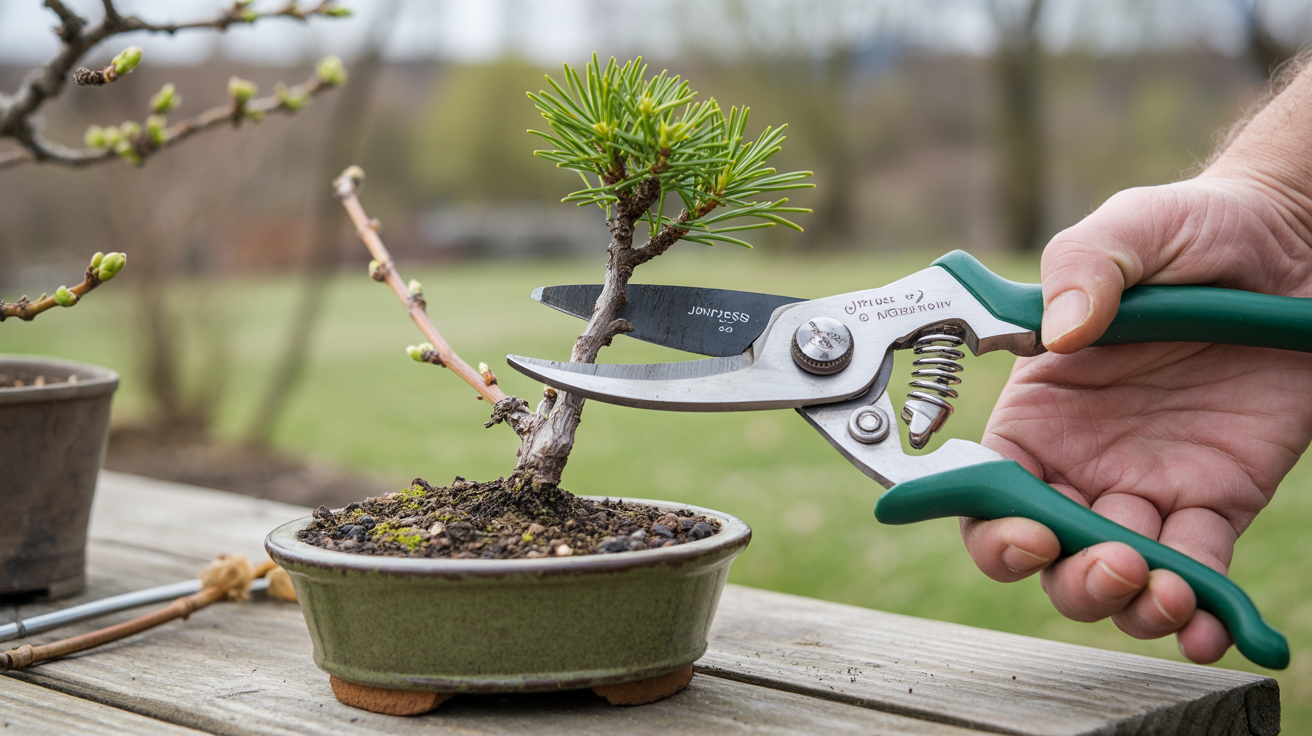
Most beginner and intermediate guides treat tool choice as a footnote, something like “use sharp, clean scissors.” That framing fundamentally misrepresents what is at stake. When you make a cut on a Juniperus chinensis or a Ficus retusa, the quality of the blade’s edge determines whether cambium cells at the wound margin begin a clean callous roll within days, or whether crushed tissue lingers, creating an entry point for pathogens. A bypass-style stainless steel shear with a ground, rather than stamped, blade produces a shearing cut that severs cells rather than bruising them. The difference is visible under a hand lens within a week, and it matters enormously on deciduous species like Acer palmatum where back-budding density depends partly on how cleanly the growth node above a cut responds to the wound signal.
The wider availability of professional-grade stainless steel pruning shears — including options marketed specifically for bonsai use, as noted in recent product coverage at umlconnector.com — is genuinely good news for growers who previously faced a steep price gap between cheap general garden tools and specialist bonsai suppliers. But accessibility creates its own problem: more options make it easier to choose badly without knowing why.
What Most Guides Get Wrong About Pruning Timing
Here is where we feel strongly: the majority of care articles focus almost entirely on when to prune in relation to the calendar, while neglecting the condition of the blade at the moment of each cut. A sterile, sharp shear used in late winter on a Prunus mume just before bud swell — roughly late February in temperate northern climates — will outperform an identical shear that has not been stropped or cleaned between trees, regardless of perfect seasonal timing. Resin from conifers, in particular, blunts a blade measurably across a single working session with a Pinus thunbergii.
A Simple Blade-Check Routine Before Every Session
- Hold the shear up to a raking light source and look along the cutting edge. Any micro-nicks will appear as bright reflective spots rather than a continuous dark line.
- Wipe both blades with isopropyl alcohol on a lint-free cloth, removing sap and debris before you begin, not after.
- Make one test cut through a piece of printer paper. A sharp bypass shear should slice without tearing or deflecting the paper.
- After every three to four cuts on a resinous conifer, pause and re-wipe with alcohol. Resin acts as an abrasive carried into the next cut.
- Finish each session with a single light pass of a ceramic sharpening rod along the flat bevel, then apply a single drop of camellia oil to the pivot point.
Our Take
Professional-grade stainless tools are worth the incremental cost, but the tool is only as good as its maintenance habit. In our view, the Japanese tradition of treating cutting tools as an extension of aesthetic intent — a sensibility worth exploring further in the context of regional practice, as we discuss in our piece on Kansai to the World: Why Japan’s Regional Bonsai Culture Deserves a Closer Look — is precisely what most Western growers are missing when they reach for whichever shear is nearest.
The actionable takeaway you can apply before your next session: run the paper-cut test on every shear in your kit right now. If any of them tear rather than slice, that tool should not touch a living branch until it has been sharpened. Your trees will respond faster than you expect.
— The Bonsai World Editorial Desk
By Redazione Bonsai World
Article researched and written with AI assistance and reviewed by the Bonsai World editorial team.