
When Anime Meets Bonsai: What Pop Culture Gets Right About Our Art
We’ve noticed a fascinating trend lately: bonsai appearing in unexpected corners of global pop culture, from anime to music videos. Most recently, a discussion featuring renowned anime director Shinichiro Watanabe drew parallels between bonsai and capoeira, two disciplines that seem worlds apart yet share a profound philosophy. This intersection deserves our attention not as a novelty, but because it illuminates something most Western bonsai guides consistently miss: the dynamic, living improvisation at the heart of true bonsai mastery.
Our Take: Movement Over Rigidity
We would argue that the comparison to capoeira—the Brazilian martial art that disguises combat as dance—captures what separates competent bonsai practice from transcendent work. Both arts require years of fundamental training, yet their highest expression comes not from rigid adherence to rules but from responsive creativity. Too many bonsai manuals present our art as a static set of instructions: wire at this angle, prune at that time, follow these proportions. This approach produces serviceable trees but rarely exceptional ones.
The parallel matters because it addresses a critical weakness in how bonsai is taught globally. We’ve observed countless enthusiasts abandoning the art after a few years, frustrated that their trees look correct on paper yet lack vitality. The problem isn’t their technical execution—it’s the mentality. They’ve learned bonsai as choreography when they should be learning it as improvisation.
What Most Guides Get Wrong
Here’s the specific issue: conventional wisdom treats tree development as a linear progression through predefined stages. You select material, establish the trunk line, develop primary branches, refine ramification, then maintain. This framework isn’t wrong, but it’s incomplete. It implies that once you reach “refinement,” the creative work is finished. In our view, this is precisely backward.
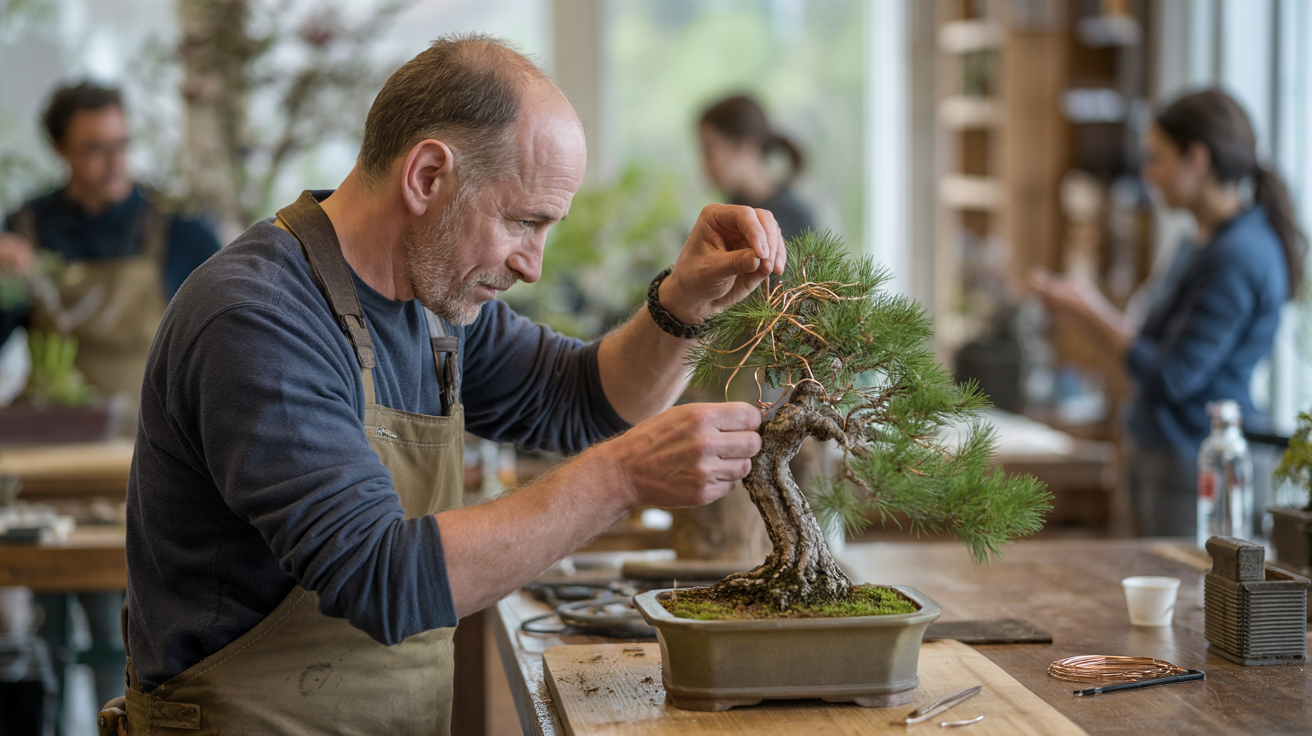
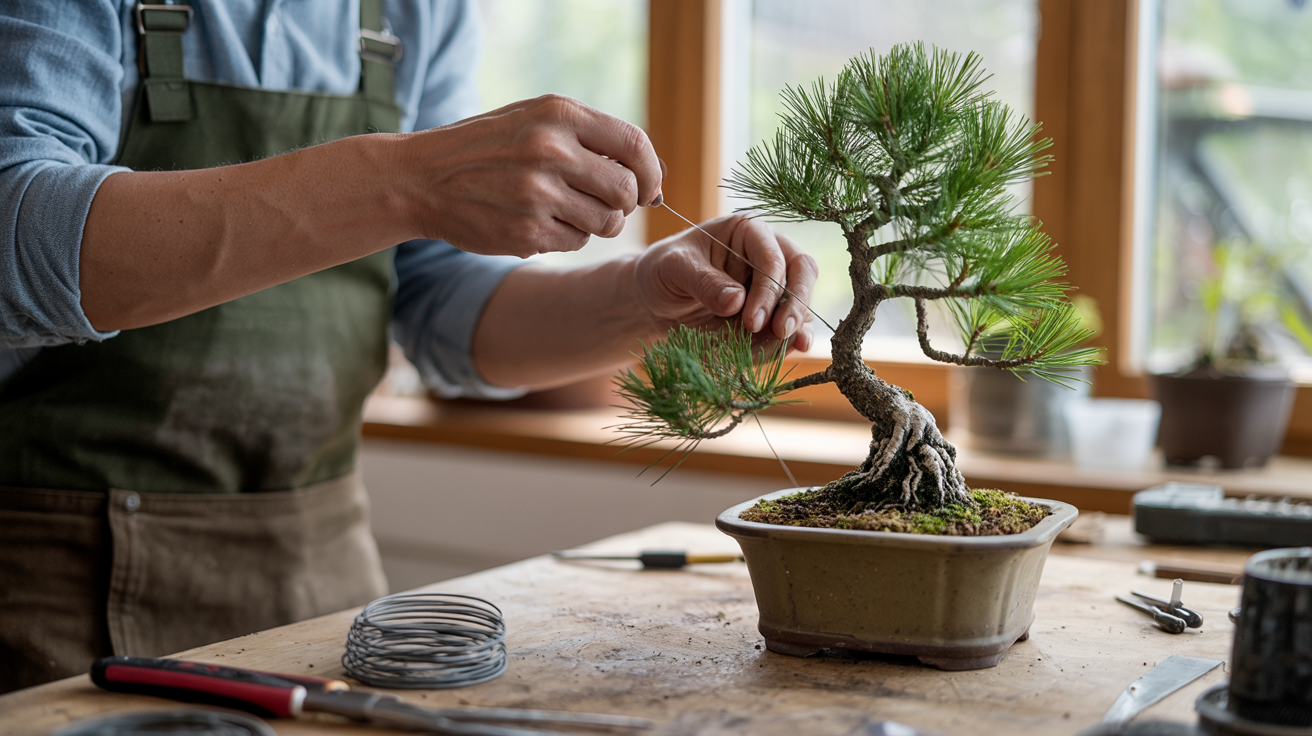
Real bonsai mastery begins when you understand that every growing season presents new possibilities. A Japanese Black Pine that’s been in training for fifteen years isn’t a finished sculpture—it’s an ongoing conversation. That back bud that emerged in July? It might become next year’s apex. The branch you planned to remove could instead be redirected using guy-wires to create movement the tree was telling you it wanted all along.
A Concrete Technique: Responsive Pruning
Let’s get specific. Here’s a technique we call responsive pruning, best practiced on deciduous species like Japanese Maple or Chinese Elm during the growing season:
- Each week during active growth (May through August in temperate zones), spend five minutes simply observing each tree without tools in hand
- Identify the three strongest shoots—not necessarily where you planned growth, but where the tree is actually pushing energy
- Ask yourself: “What is this tree trying to tell me?” rather than “What does my design require?”
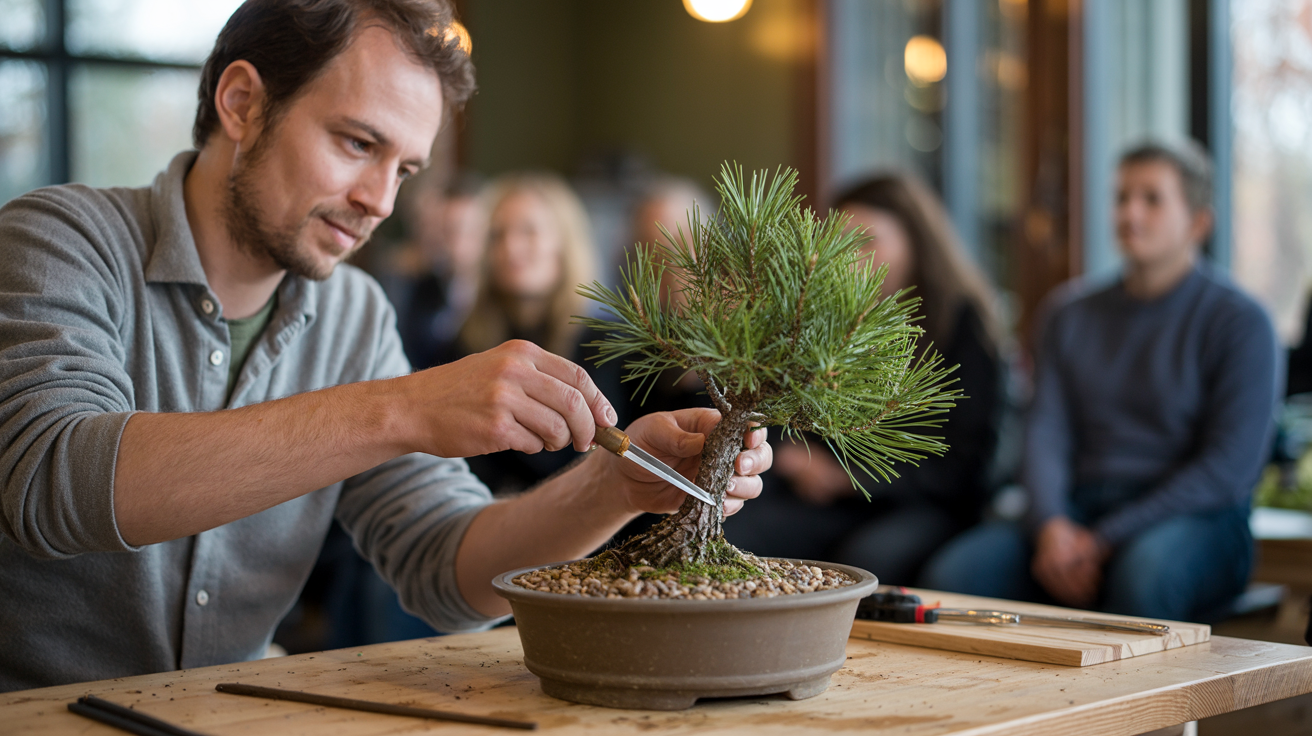
- Make one responsive cut based on the tree’s actual vigor pattern, even if it diverges from your original plan
- Document the decision in a growing journal with a simple sketch
This approach acknowledges that our trees are living partners, not passive clay. A Chinese Elm grown from a cutting might develop unexpected trunk movement if you follow its natural lean rather than staking it vertical immediately. That “flaw” could become your tree’s defining character.
Why This Matters Now
As bonsai continues globalizing, we risk homogenizing the art into a set of international standards that prioritize technical perfection over expressive vitality. The cross-pollination with other cultural disciplines—whether capoeira, jazz improvisation, or contemporary dance—reminds us that mastery in any living art requires both discipline and spontaneity.
Pop culture references might seem superficial, but they often reveal deeper truths precisely because they come from outside our established frameworks. When an anime director connects bonsai to capoeira, he’s recognizing something practitioners sometimes forget: we’re not just maintaining miniature trees. We’re engaged in a decades-long improvisation with living material that has its own agenda.
Actionable Takeaway
This week, select one established tree in your collection. Instead of following your maintenance schedule, observe it for five full minutes. Identify one place where the tree’s growth surprised you—a vigorous shoot in an unexpected location, a branch thickening faster than planned. Make one small decision that honors that surprise rather than correcting it. Document what happens over the next month. You might discover your tree has better ideas than you do.
This article was created with AI assistance by the Bonsai World editorial team.