
Why Cross-Border Judging Signals a New Era for Tropical Bonsai
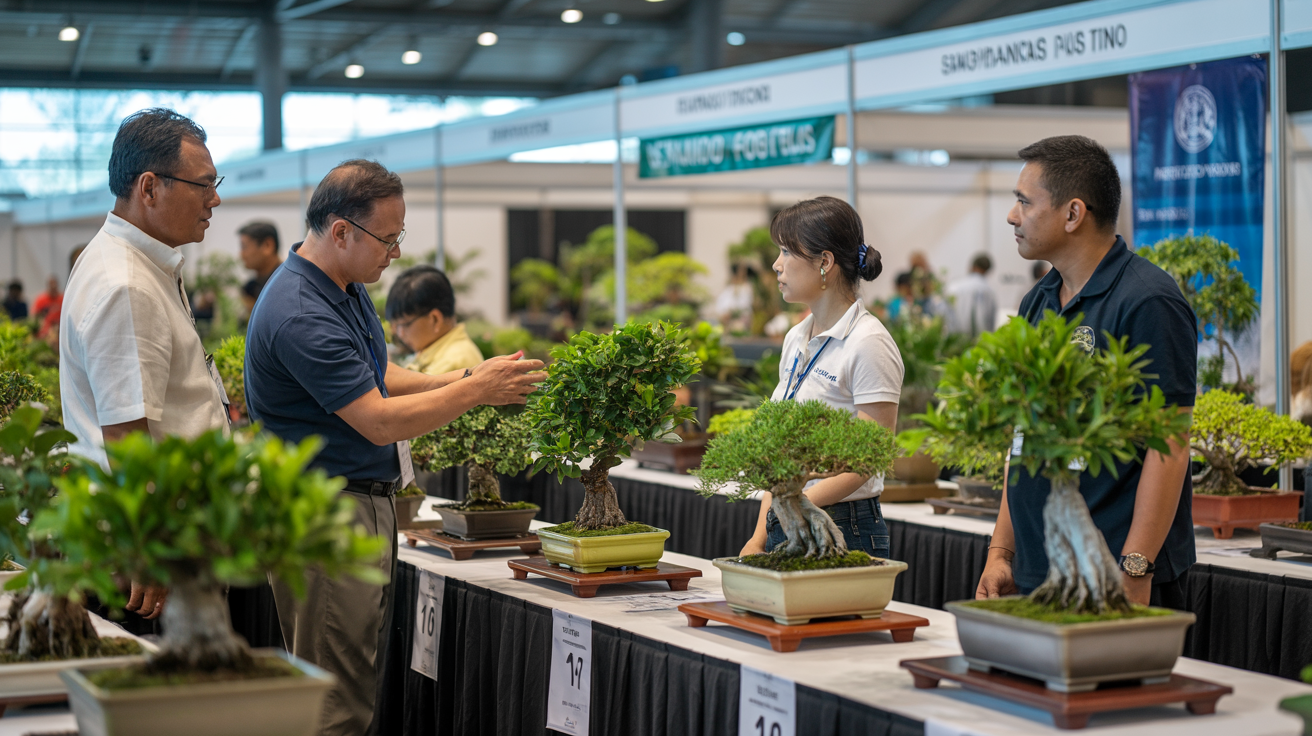
In our view, the invitation of Taiwanese master Liu Chien-cheng to judge the Philippines’ largest bonsai competition represents far more than a ceremonial gesture. It marks a pivotal shift in how Southeast Asian bonsai communities are beginning to challenge the longstanding dominance of temperate-climate aesthetics and recognize their own regional strengths. For growers working with tropical and subtropical material, this development matters because it validates approaches that traditional Japanese and Chinese canons have historically overlooked or dismissed.
The Tropical Disadvantage We Rarely Discuss
Most international bonsai guides continue to privilege species like Japanese black pine, Japanese maple, and Chinese elm—all trees that evolved in regions with pronounced seasonal dormancy. We would argue this creates an implicit bias in judging criteria. Ramification standards, bark aging timelines, and even pot selection norms are calibrated to temperate species behavior. When a Filipino grower presents a meticulously trained Samanea saman or a Philippine ebony, judges schooled exclusively in East Asian temperate traditions often struggle to assess the work fairly. They apply maple standards to trees that simply do not operate on maple biology.
What most guides get wrong is assuming that tropical bonsai lacks refinement potential. The truth is that tropical species require different refinement techniques, not lesser ones. The challenge is not absence of winter dormancy but rather managing year-round growth energy and leveraging it strategically.
A Technique Most Temperate Guides Ignore: Staggered Defoliation
For tropical Ficus species—ubiquitous across the Philippines and much of Southeast Asia—we recommend a staggered partial defoliation approach that contradicts standard advice. Instead of complete spring defoliation as you would perform on a deciduous temperate tree, remove only the largest forty percent of leaves every six to eight weeks during the growing season. This maintains photosynthetic capacity while forcing backbudding and reducing leaf size progressively.
Here is our step-by-step method:
- Identify the five to seven largest leaves on each branch section
- Cut these leaves at the petiole base with sharp scissors in early morning
- Leave all smaller leaves intact to sustain the tree’s energy production
- Wait six weeks, then repeat on the next cohort of largest leaves
- Adjust timing based on your local wet and dry seasons—perform this work during periods of moderate moisture, never during peak monsoon or drought stress
This technique exploits the constant growing conditions of the tropics rather than fighting them. It produces ramification density comparable to temperate species but on a timeline that respects tropical physiology.
Why Cross-Pollination of Judging Standards Elevates Everyone
When judges like Liu Chien-cheng cross borders to evaluate work outside their home context, they bring technical rigor but must also adapt their expectations. This adaptive process benefits both parties. The visiting judge expands their understanding of what bonsai can be when climate constraints shift. The host community receives validation that their work meets international standards of craftsmanship, even when the aesthetic differs from Kyoto or Suzhou conventions.
In our experience editing this magazine, we have observed that the most innovative bonsai work now emerges at these intersection points—where growers combine classical discipline with regional material honesty. The Philippines has extraordinary native species that deserve sophisticated horticultural treatment. Taiwan has developed hybrid approaches blending Chinese, Japanese, and Southeast Asian influences. Bringing these traditions into direct conversation through judging exchanges accelerates learning in all directions.
Our Take
The era of monolithic bonsai standards is ending, and that ending is overdue. Regional judging exchanges like this Philippine competition signal that tropical and subtropical growers are claiming their place in the global bonsai conversation—not as students perpetually learning from temperate masters, but as peers developing parallel mastery suited to their own climates.
Actionable Takeaway
If you work with tropical material, stop apologizing for its differences from temperate species. Instead, document your specific techniques—defoliation timing, fertilizer adjustments for year-round growth, humidity management—and share them within your local community. The future of bonsai depends on regional expertise becoming codified knowledge, not remaining informal practice.
This article was created with AI assistance by the Bonsai World editorial team.