
Why Patience Alone Won’t Make You a Better Bonsai Artist
We’ve all heard it before: bonsai teaches patience. It’s the well-worn mantra repeated in beginner guides, nursery programs, and introductory workshops. While recent attention to patience as a bonsai virtue is welcome, we would argue this framing actually misses the point and can mislead beginners into passivity when they should be learning active observation.
Patience suggests waiting. But what distinguishes competent bonsai practitioners from frustrated beginners isn’t their ability to sit still—it’s their capacity to recognize the precise moment when intervention is needed and when restraint serves the tree better. This is not semantics. It’s the difference between losing a promising juniper to wire scarring because you waited too long to remove it, and achieving elegant movement that looks effortless.
The Observation Gap Most Guides Ignore
In our view, the patience narrative papers over a critical skill that separates mediocre bonsai work from exceptional artistry: systematic observation. When we tell beginners to “be patient,” we inadvertently encourage them to check their trees sporadically, to trust that time alone will improve their work. The reality is that successful bonsai cultivation demands daily visual assessment, especially during the growing season.
Consider the practical example of a Chinese elm in spring flush. Between late April and early June in temperate climates, new shoots can extend two inches in a week. If you’re being “patient” and checking weekly, you’ve already missed the ideal moment for pinching—which on Chinese elm should happen when the shoot reaches four to six leaves but before the internode lignifies. That window might be just three to five days wide. Miss it, and you’ll either remove too little growth and lose ramification opportunities, or you’ll cut into hardened wood and create ugly scars on delicate branches.
A Better Framework: Active Patience
What we advocate for is active patience—a mindset that combines restraint with engaged observation. Here’s how to implement this approach with any species:
- Establish a daily thirty-second visual inspection routine. Walk around the tree. Note changes in leaf color, shoot extension, soil moisture at the surface, and any pest activity.
- Keep a simple log, even just smartphone photos with date stamps. Reviewing weekly patterns reveals growth rhythms you’d never notice otherwise.
- Learn the specific growth windows for your primary species. For Japanese maples, the critical decisions happen during bud swell in early spring and again during summer pruning in June or July, depending on your hardiness zone.
- Distinguish between strategic waiting and neglectful inattention. Strategic waiting means you’ve assessed the tree, determined no intervention improves the outcome right now, and scheduled your next checkpoint.
The Timing Detail Everyone Misses
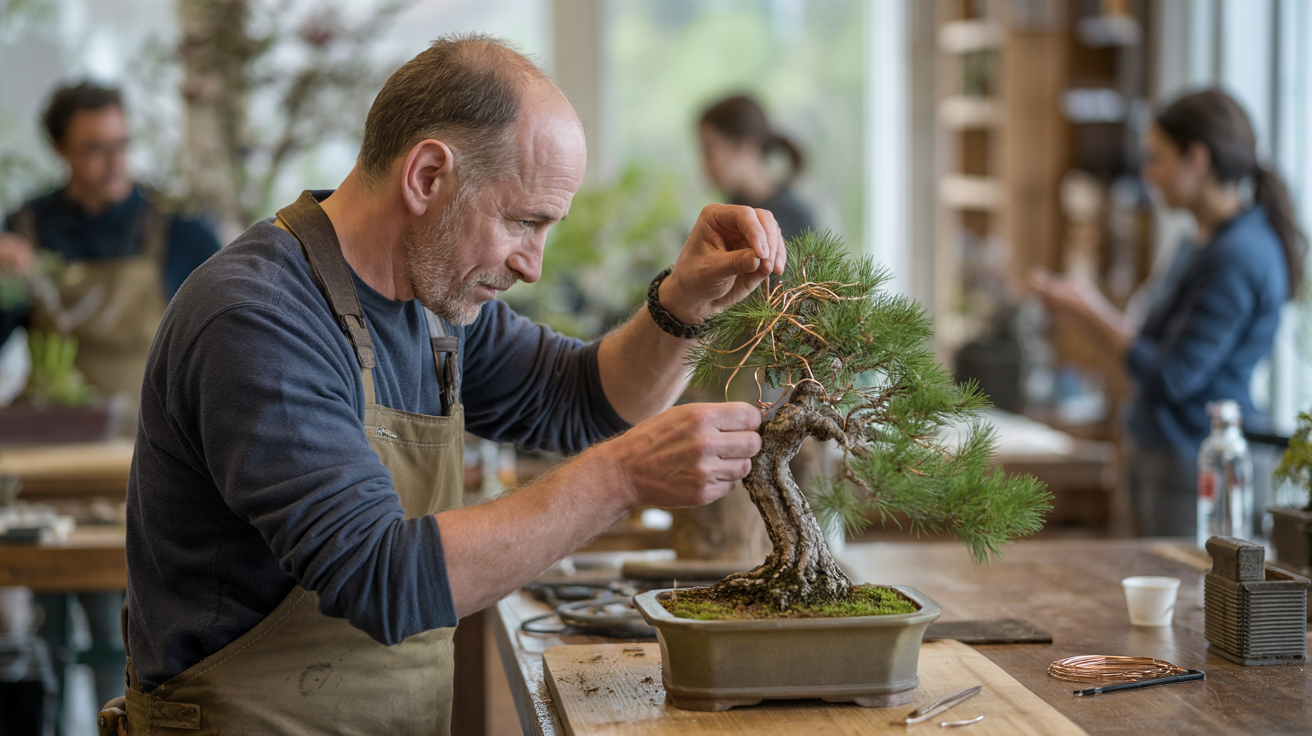
Here’s a specific detail that even intermediate practitioners often overlook: the ideal time to remove training wire from most deciduous species isn’t based on calendar months but on the secondary thickening phase. On Japanese maple, zelkova, and hornbeam, you’ll notice a subtle swelling just behind the wire coil as cambium activity accelerates. This happens roughly six to ten weeks after leaf emergence, but varies with your fertilization intensity and the branch’s vigor. Check wire points every three days once leaves have hardened off. The moment you see that slight bulge forming adjacent to the wire, you have perhaps one week before scarring becomes permanent. This is active patience—knowing what to look for and when to look for it.
Our Take
Patience is necessary but insufficient. The bonsai artists we most admire aren’t necessarily the most patient; they’re the most observant. They’ve trained themselves to see changes invisible to casual viewers and to time their interventions with precision. This is what we should be teaching beginners—not to wait longer, but to watch more carefully.
Actionable Takeaway
Starting today, photograph your tree from the same angle every morning for two weeks. Review the sequence on day fifteen. You’ll be startled by changes you never consciously noticed—and you’ll begin developing the observational rhythm that actually matters.
This article was created with AI assistance by the Bonsai World editorial team.