
Why Regional Bonsai Shows Are the Training Ground You’re Ignoring
We need to talk about the elephant in the room—or rather, the beautifully trained juniper at the community center. While most bonsai practitioners obsess over purchasing the perfect tree from high-end nurseries or scrolling through Instagram accounts of Japanese masters, they’re missing the most valuable educational resource sitting in their own backyard: regional bonsai society shows.
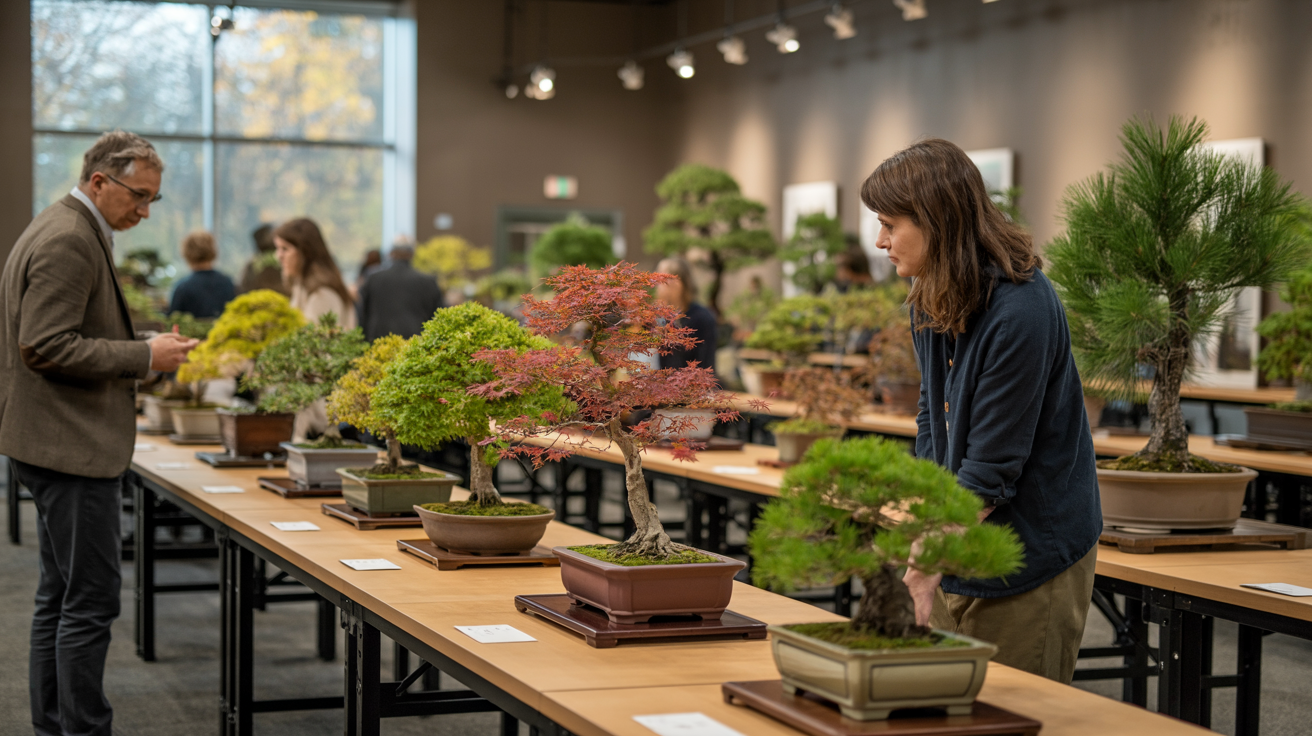
The recent Pittsburgh Bonsai Society’s 45th annual exhibition reminds us of something fundamental: longevity matters. A society celebrating its 45th show means four and a half decades of accumulated regional knowledge about what species thrive in Pennsylvania’s USDA zones 6a-7a, which styling approaches work for locally sourced material, and—most critically—how trees develop over decades under real-world conditions, not idealized greenhouse environments.
Our Take: The Critique Problem
In our view, the bonsai community has developed an unhealthy relationship with critique. Online forums either descend into toxic negativity or become echo chambers of unconditional praise. Regional shows offer something vanishingly rare: face-to-face, nuanced critique from practitioners who understand your specific growing conditions. When a Pittsburgh grower shows a collected Eastern hemlock that survived three brutal winters, the feedback isn’t theoretical—it’s battle-tested wisdom about winter protection, watering schedules during freeze-thaw cycles, and styling that accounts for the species’ slower back-budding compared to Japanese cultivars.
What most guides get wrong is treating all junipers, maples, or pines as monolithic categories. A Scots pine behaves differently in Pittsburgh than in Phoenix. Regional shows force this specificity. You’re not seeing someone’s abstract interpretation of “pine bonsai”—you’re seeing Pinus sylvestris that endured last February’s ice storm, developed in local aggregate that drains properly for local precipitation patterns, and styled to complement rather than fight the tree’s response to local photoperiods.
The Hands-On Advantage
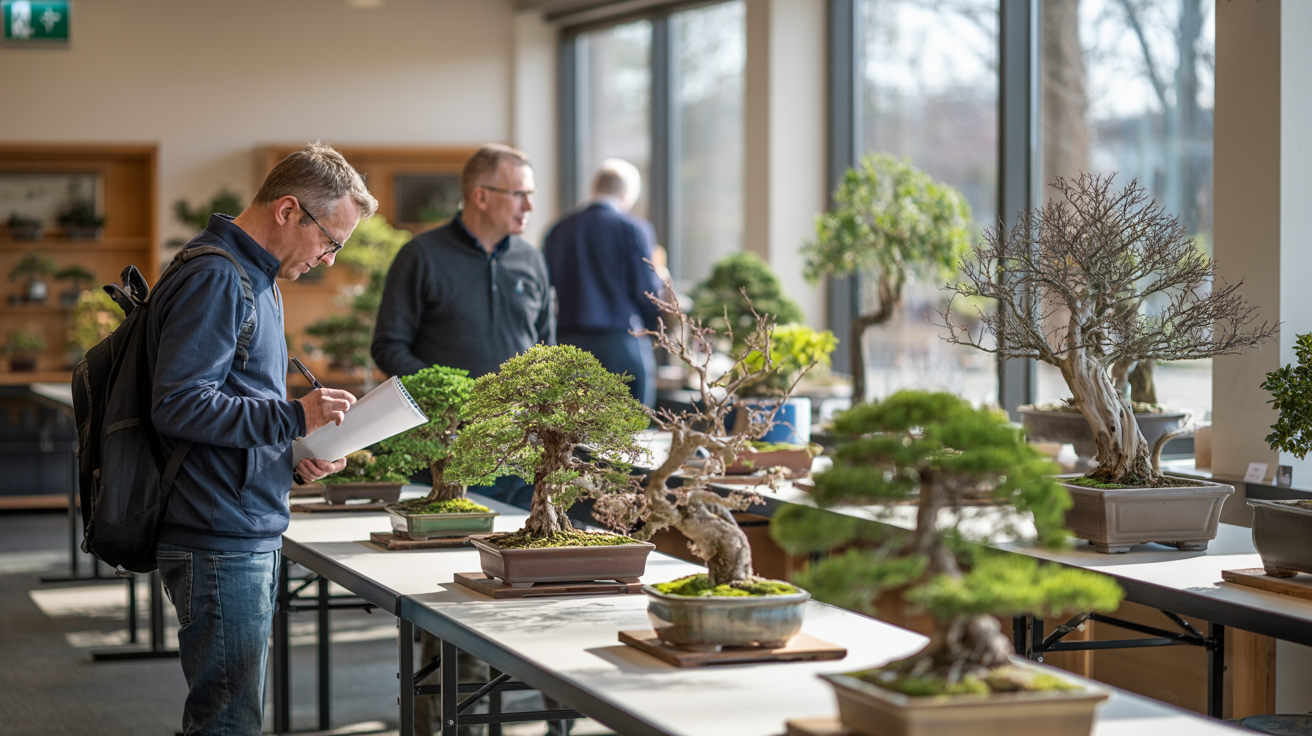
Here’s a concrete technique we would argue every intermediate grower should practice at their next regional show: comparative root-flare analysis. Walk the display tables with one specific mission—photograph the nebari (root flare) of every mature deciduous tree, particularly trident maples, American elms, and hornbeams. Note the trunk diameter, the number of major surface roots, and their radial distribution.
Then, back home, compare these images to your own trees. This exercise reveals something textbooks can’t teach: what realistic root development looks like after fifteen, twenty, or thirty years of refinement. You’ll notice that exhibition-quality specimens typically show five to eight major surface roots radiating evenly, emerging at roughly the same height, with the transition from trunk to root occurring within the top inch of soil. Most importantly, you’ll see which compromises real growers accept—the slightly thick root they couldn’t eliminate without killing a branch, the gap in radial distribution they’ve cleverly hidden with front-angle placement.
The Actionable Path Forward
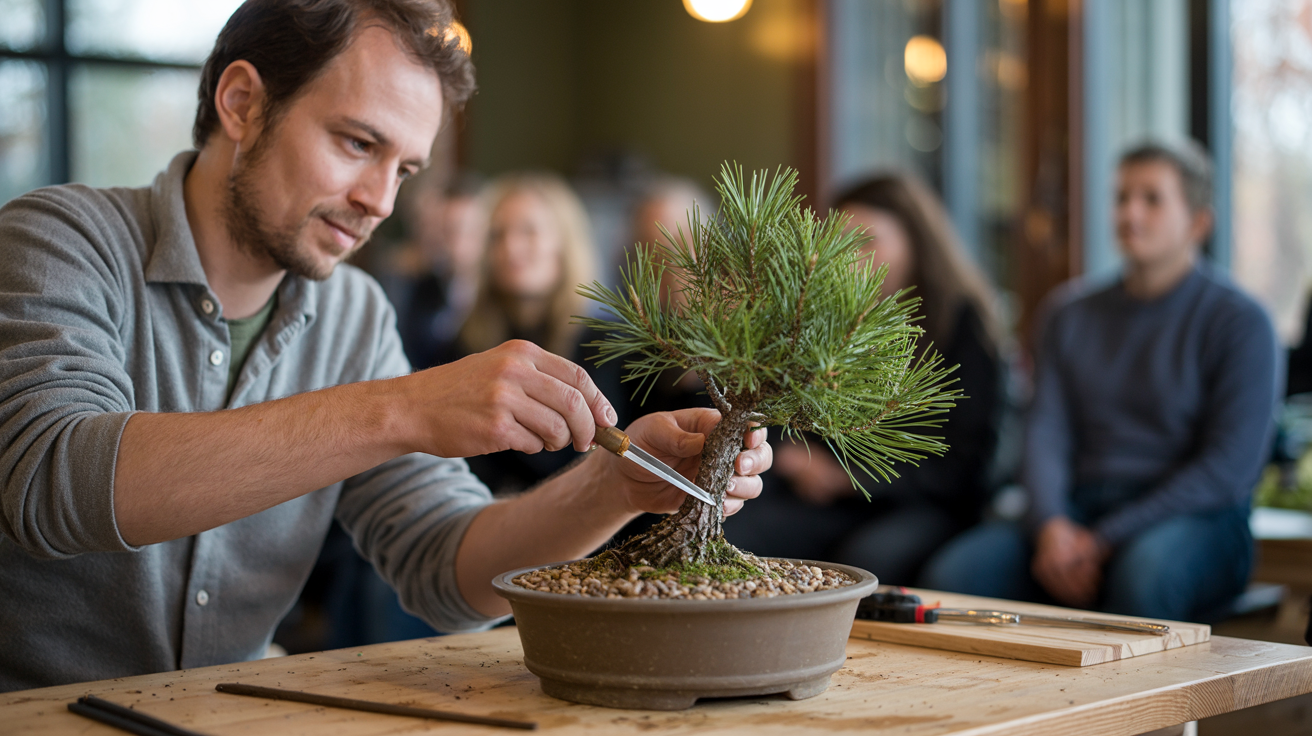
Regional shows also offer workshops and demonstrations tailored to local species. Spring shows typically feature repotting demonstrations on trees at the correct seasonal timing for that climate zone. For Pittsburgh in early spring, that means repotting Japanese maples as buds extend but before leaves unfurl—usually late March to early April. This timing differs from coastal California or Florida, yet generic online guides rarely specify these regional variations.
If you attend only one bonsai event this year, make it a regional show within driving distance. Skip the national conventions, ignore the expensive imports. The humble club show in your area contains more immediately applicable knowledge than a dozen books written for different climates. Bring a notebook, ask questions about species you can actually acquire locally, and study trees grown in conditions identical to your own backyard.
Actionable takeaway: This week, identify your nearest bonsai society and mark their next show on your calendar. When you attend, focus on one species you currently grow and photograph every example on display from multiple angles, noting the owner’s name for follow-up questions. That targeted study will accelerate your development more than any generic online tutorial.
This article was created with AI assistance by the Bonsai World editorial team.