
In our years covering the bonsai world, we’ve come to recognize certain practitioners whose work challenges us to rethink established conventions while honoring deep tradition. Fan Shunli is one such figure. Known for his exceptional work within the Chinese tradition of penjing, Fan has earned recognition not through flamboyance or self-promotion, but through a quietly rigorous approach to tree development that speaks volumes about patience, horticultural precision, and an aesthetic philosophy rooted in natural observation.
A Distinctive Approach to Natural Form
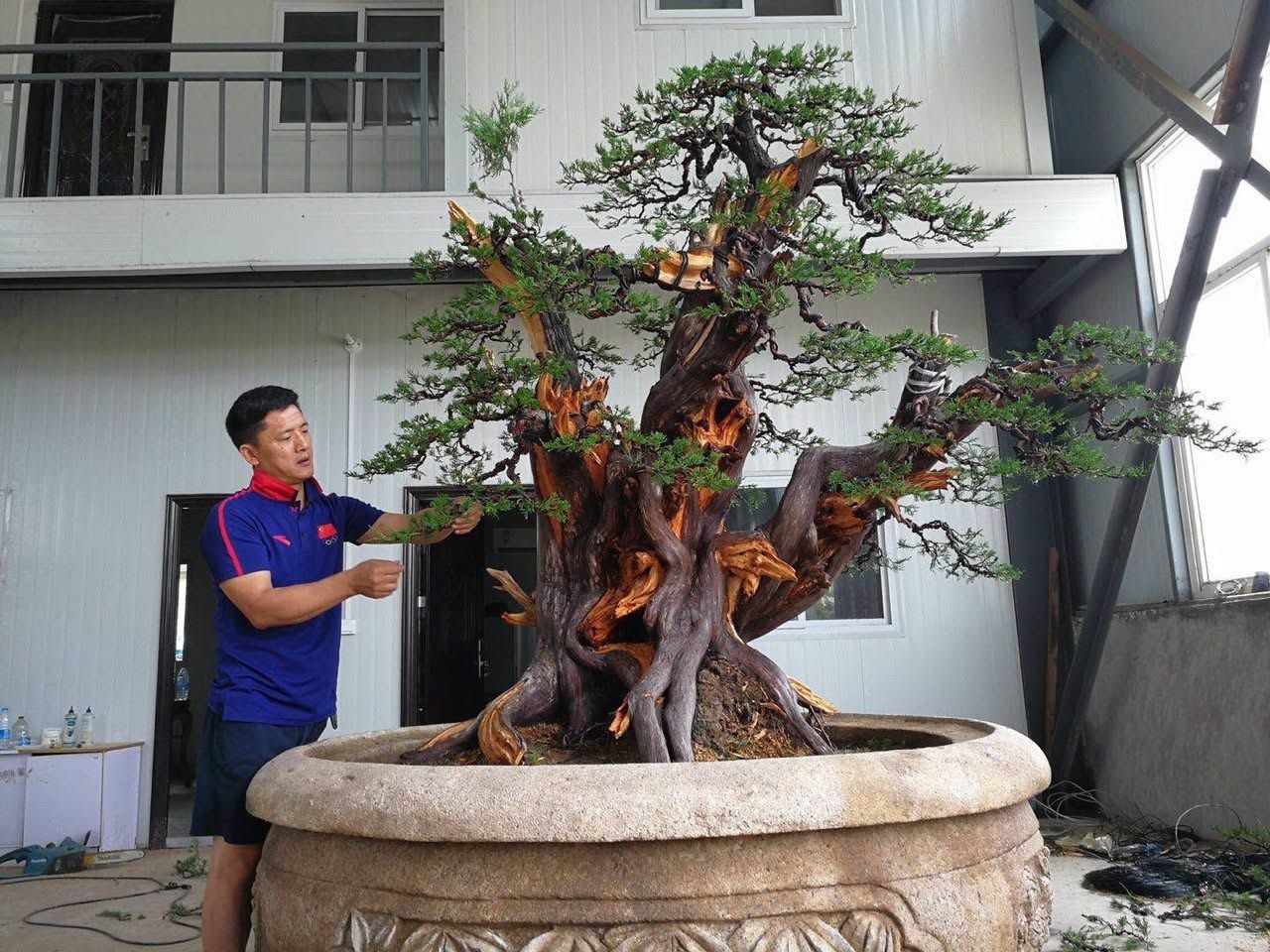
What sets Fan Shunli apart is his commitment to capturing the essence of trees as they appear in the wild, particularly those shaped by harsh environments. His work demonstrates an understanding that the most compelling bonsai are not merely miniaturized trees, but rather interpretations of how wind, weather, elevation, and time sculpt living wood. This is especially evident in his treatment of deadwood features and his selective use of jin and shari techniques, which in lesser hands can appear forced or artificial. In Fan’s compositions, these elements emerge as integral to the tree’s story, not decorative afterthoughts.
We’ve observed that Fan’s styling choices consistently favor subtlety over drama. While some contemporary practitioners lean toward bold, immediately impressive silhouettes, his trees often reveal their depth gradually. The branch structure invites closer inspection; the negative space is as thoughtfully composed as the foliage masses. This restraint reflects a maturity of vision that we believe is too rare in an era where social media rewards instant visual impact.
Technical Mastery in Service of Vision
Fan Shunli is particularly associated with his horticultural skill in cultivating healthy, vigorous trees that can withstand the intensive shaping required for high-level bonsai work. This may seem an obvious prerequisite, yet we’ve seen countless examples where ambitious styling outpaces the practitioner’s ability to maintain tree health. Fan’s work demonstrates that technical excellence and artistic vision are inseparable. His understanding of species-specific growth patterns, seasonal timing for interventions, and long-term development strategies allows him to realize designs that might take decades to complete.
His work with native Chinese species deserves particular attention. Rather than defaulting to the pine-and-juniper palette familiar to many practitioners, Fan has explored the aesthetic possibilities of species deeply embedded in Chinese landscape tradition. This choice reinforces the cultural continuity between contemporary penjing and its historical antecedents, reminding us that bonsai is not a culturally neutral practice but one enriched by regional knowledge and centuries of accumulated wisdom.
What Fan Shunli Teaches Us
The most important lesson we draw from Fan’s body of work is the value of restraint combined with patience. In our view, the current bonsai landscape sometimes privileges rapid transformation and dramatic before-and-after narratives. Fan’s approach offers a counterpoint: trees that develop slowly, through incremental refinements, often achieve a depth and naturalness that cannot be rushed. His work suggests that the artist’s role is not to impose a preconceived design onto resistant material, but to observe carefully, respond to what the tree offers, and guide rather than force its development.
Our Take
Fan Shunli represents a tradition-grounded yet forward-looking approach to penjing that Western practitioners would do well to study more closely. His work reminds us that mastery is built on horticultural competence, aesthetic sensitivity, and the willingness to let trees mature into their fullest expression over years or decades.
Takeaway for Your Practice
Before your next major styling session, spend time observing mature trees in natural settings, particularly those growing in challenging conditions. Photograph branch angles, deadwood patterns, and how foliage masses distribute in response to environmental pressures. Let these observations inform your design choices rather than relying solely on conventional bonsai forms. Fan’s work teaches us that nature remains our most reliable instructor.
This article was created with AI assistance by the Bonsai World editorial team.