
When we consider the practitioners who have shaped modern bonsai aesthetics over the past several decades, Koji Hiramatsu stands as a figure whose work commands attention not through spectacle, but through a kind of disciplined restraint that reveals itself slowly to the patient observer. His trees don’t shout. They whisper, and in that whisper lies a lesson about the true nature of refinement in this ancient art.
The Hiramatsu Approach: Subtlety Over Statement
What sets Hiramatsu’s work apart is his commitment to naturalism that borders on the devotional. Where some contemporary practitioners have pushed bonsai toward increasingly dramatic forms—extreme deadwood, radical bends, theatrical jin and shari—Hiramatsu has consistently championed a different path. His trees are known for their sense of quiet inevitability, as though each branch grew exactly where it needed to be without human interference, despite the countless hours of careful wiring and positioning that created the effect.
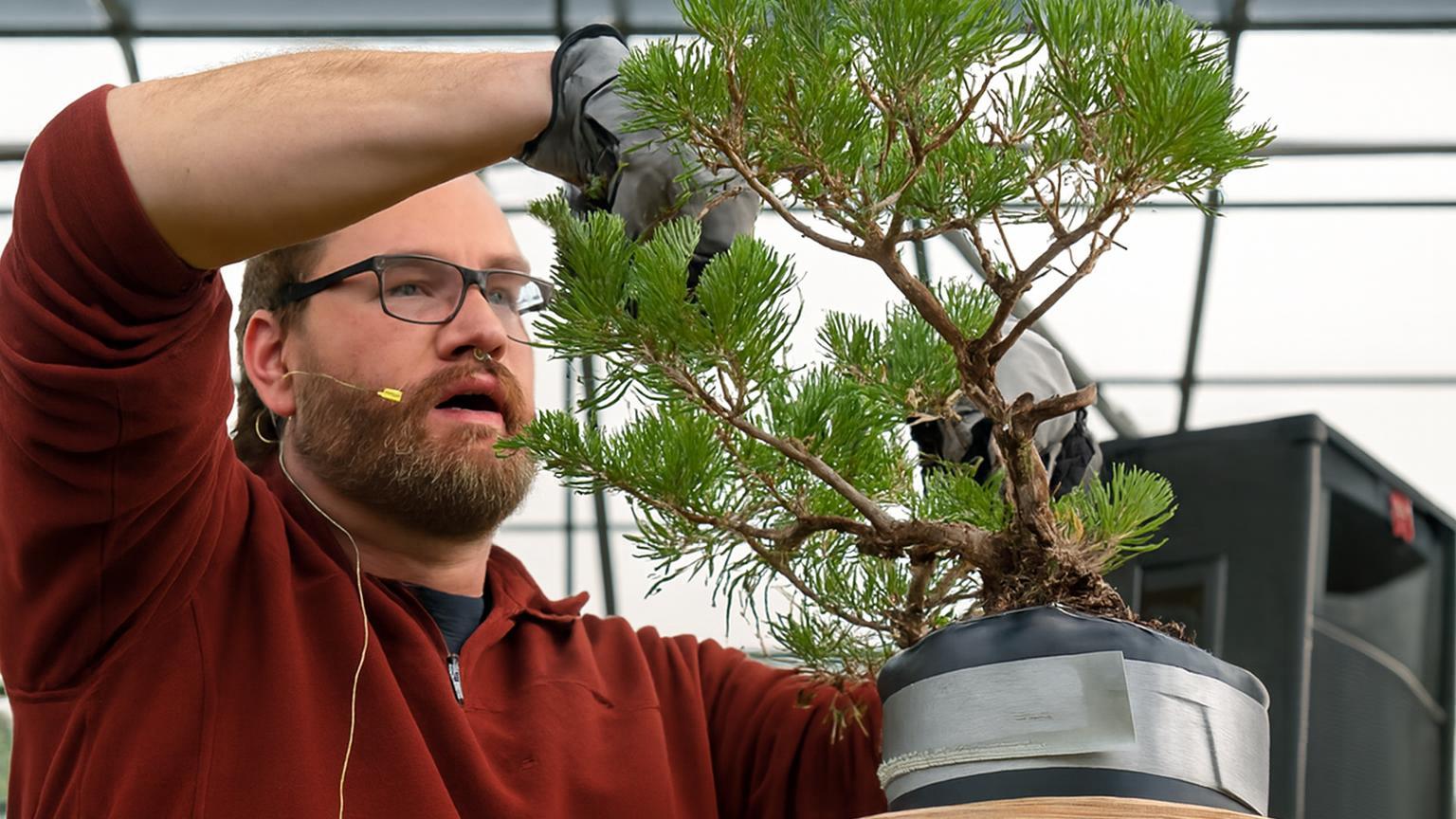
This philosophy extends to his choice of material and styling decisions. Hiramatsu is particularly associated with conifers, especially pines, where his expertise in creating delicate, cloud-like foliage pads demonstrates a mastery of negative space that many growers overlook in their eagerness to fill every gap. The interplay of solid and void in his compositions reflects a sophisticated understanding of classical Japanese aesthetics—the concept that what is left out is as important as what remains.
Technical Excellence in Service of Vision
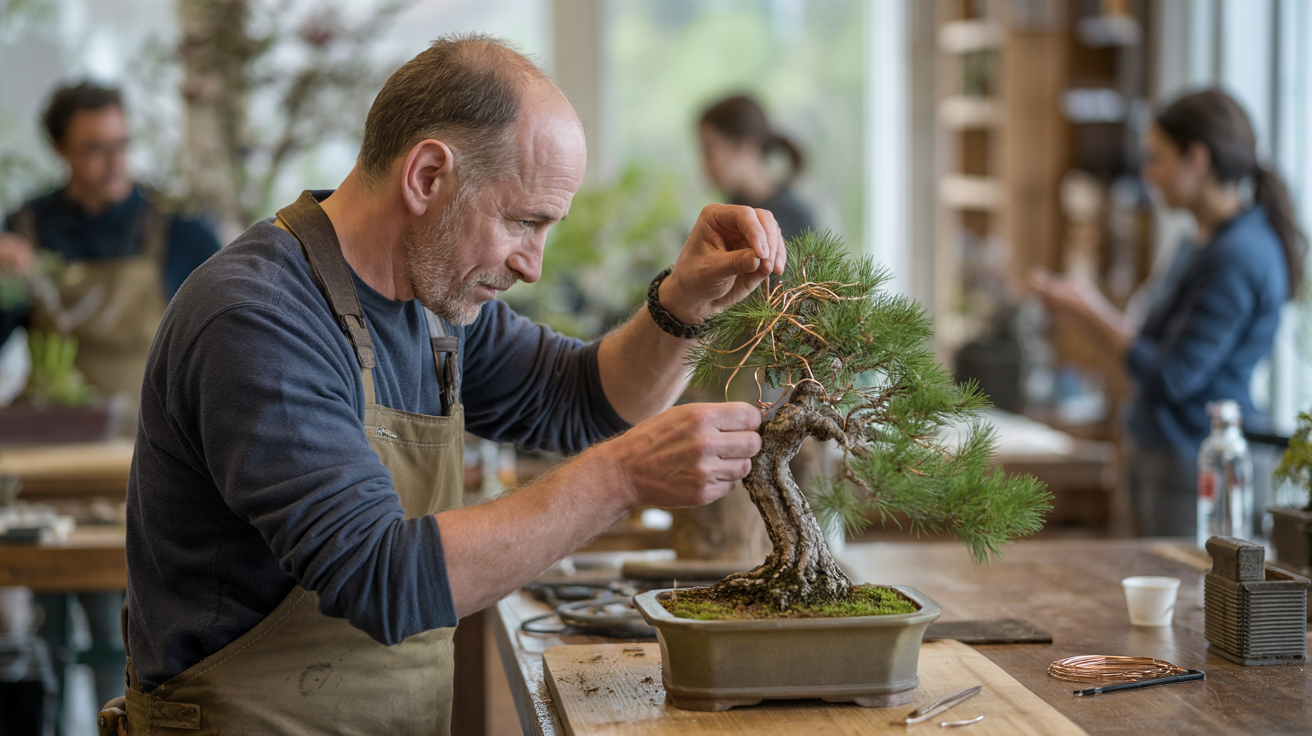
We’ve observed that Hiramatsu’s technical skill serves his artistic vision rather than overwhelming it. His wiring is meticulous, his understanding of horticultural requirements comprehensive, yet the technique never becomes the point. This represents a maturity in bonsai cultivation that many practitioners spend decades trying to achieve: the ability to deploy advanced techniques invisibly, so the viewer sees only the tree, not the hand that shaped it.
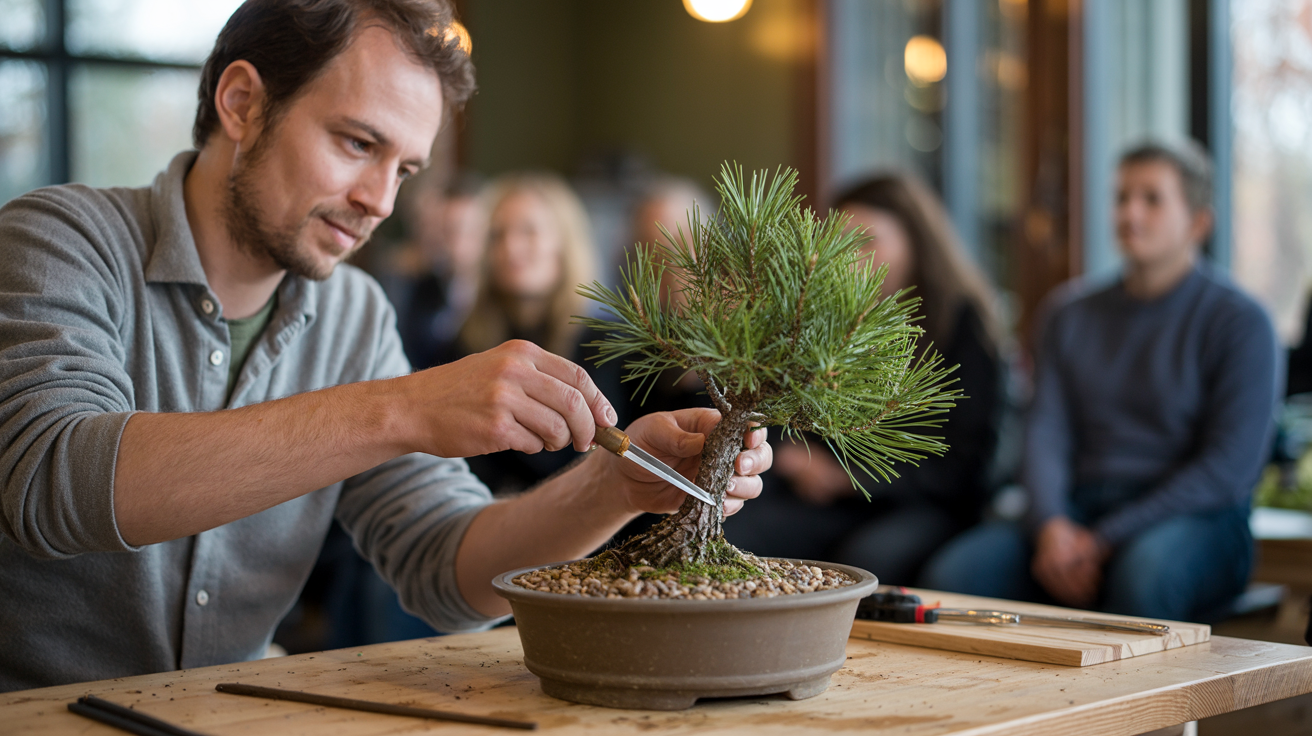
His work with branch structure particularly rewards study. Rather than creating uniform pads or overly symmetrical arrangements, he cultivates an asymmetry that feels organic. The branches don’t simply radiate from the trunk at predictable intervals; they emerge with the irregular rhythm of trees shaped by wind, snow, and time. This attention to mimicking nature’s own design principles separates competent styling from truly exceptional artistry.
Influence on Contemporary Practice
Hiramatsu’s influence can be traced through the broader movement toward naturalistic styling that has gained prominence in recent years, particularly outside Japan. While he works within traditional frameworks, his interpretation has shown practitioners worldwide that tradition need not mean rigidity. There’s room within classical forms for individual expression, provided that expression serves the tree rather than the ego.
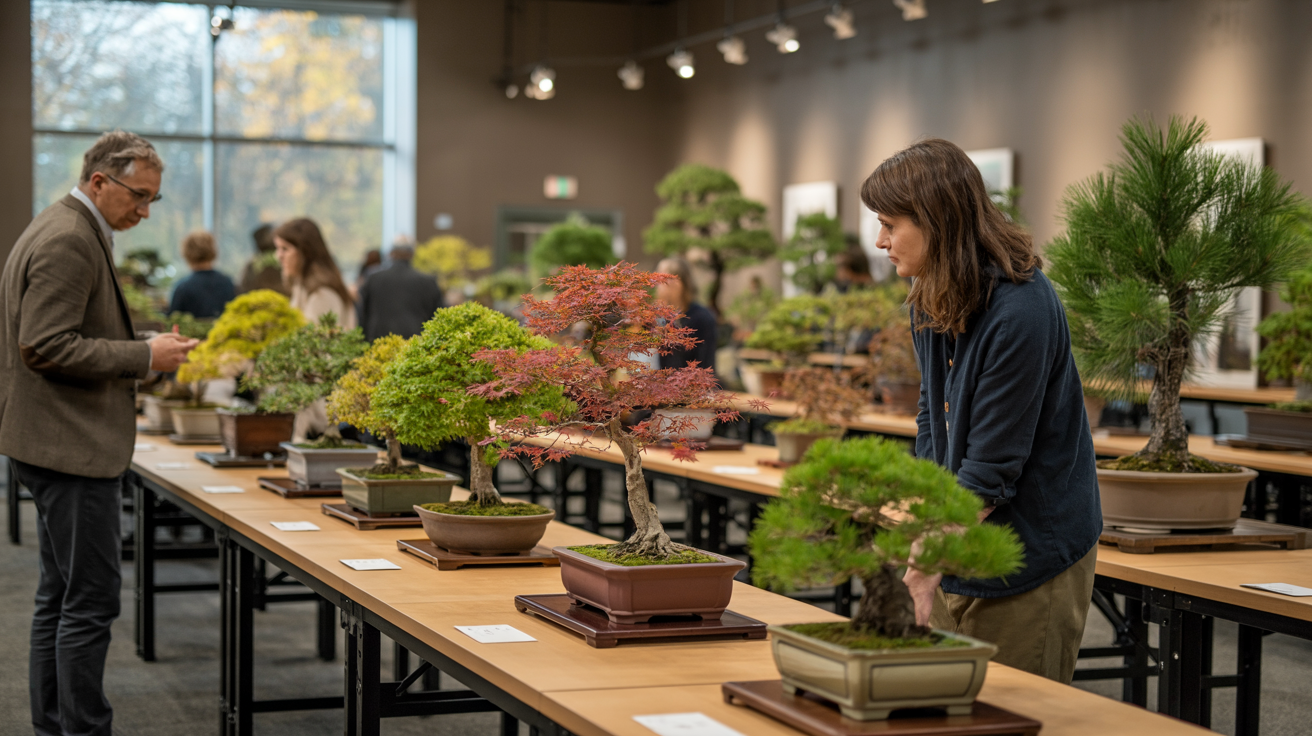
His approach also offers an important counterweight to the “bigger is better” mentality that sometimes pervades competitive bonsai. His trees demonstrate that refinement and impact aren’t measured in trunk diameter or cascade length, but in the coherence of the overall vision and the quality of every detail from nebari to apex.
Our Take
What we find most instructive about Koji Hiramatsu’s body of work is its implicit challenge to hurry. In an era when social media encourages rapid styling and instant results, his trees remind us that the finest bonsai emerge from patience compounded over seasons and years. The refinement he achieves isn’t available as a shortcut or hack—it’s the accumulated result of observation, adjustment, and restraint.
Actionable Takeaway
Study the negative space in your own trees as carefully as you study the positive forms. Before your next wiring session, spend time identifying not just where branches should go, but where emptiness should remain. Consider which branches to remove entirely rather than simply repositioning everything you have. Sometimes the most important decision is knowing what not to do, and that lesson alone can transform your work from busy to breathtaking.
This article was created with AI assistance by the Bonsai World editorial team.