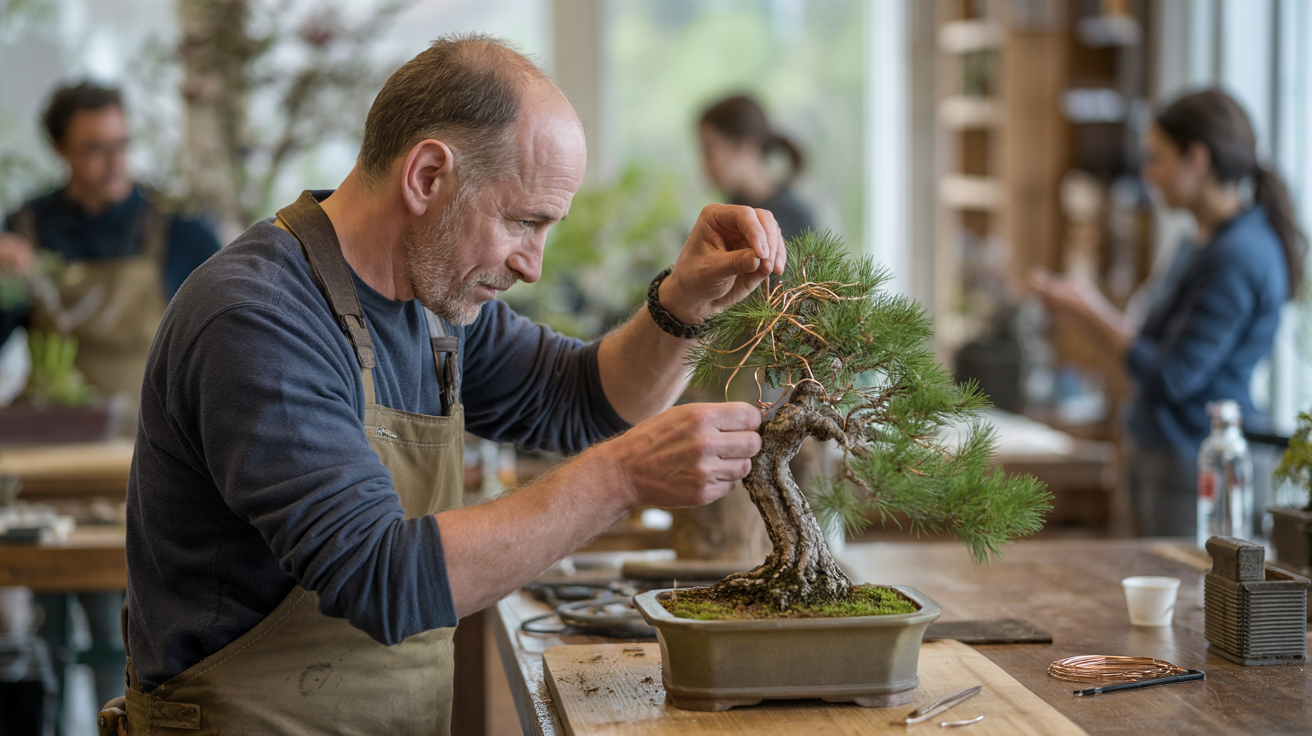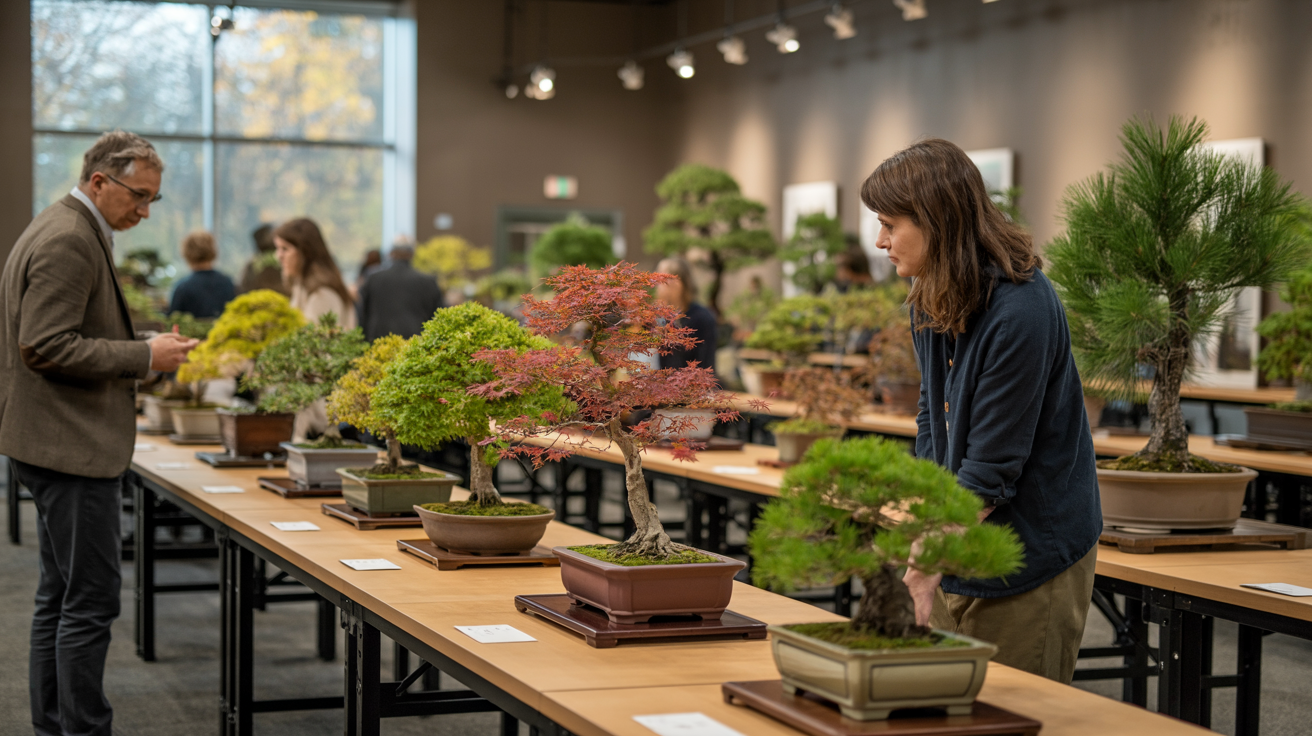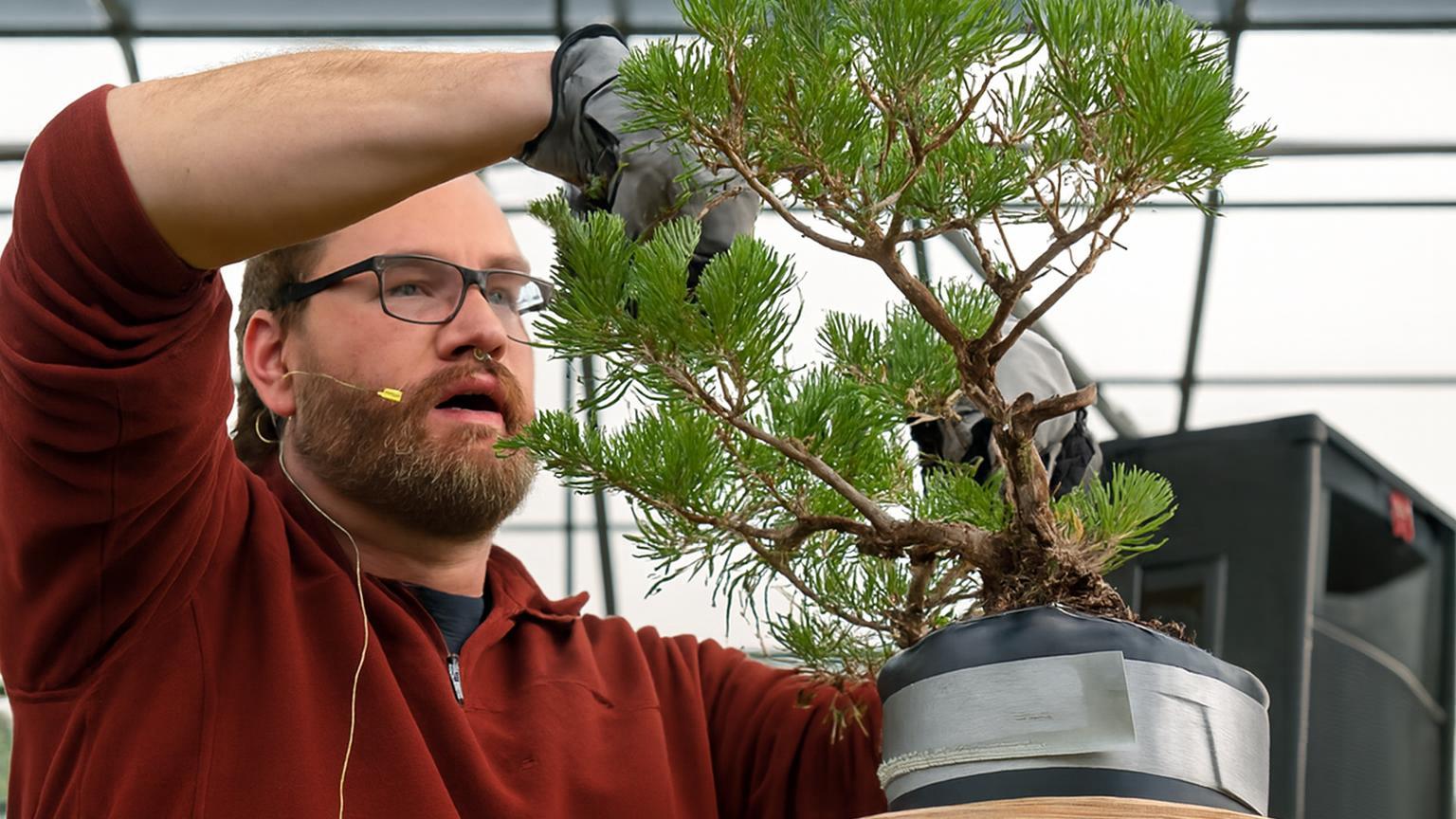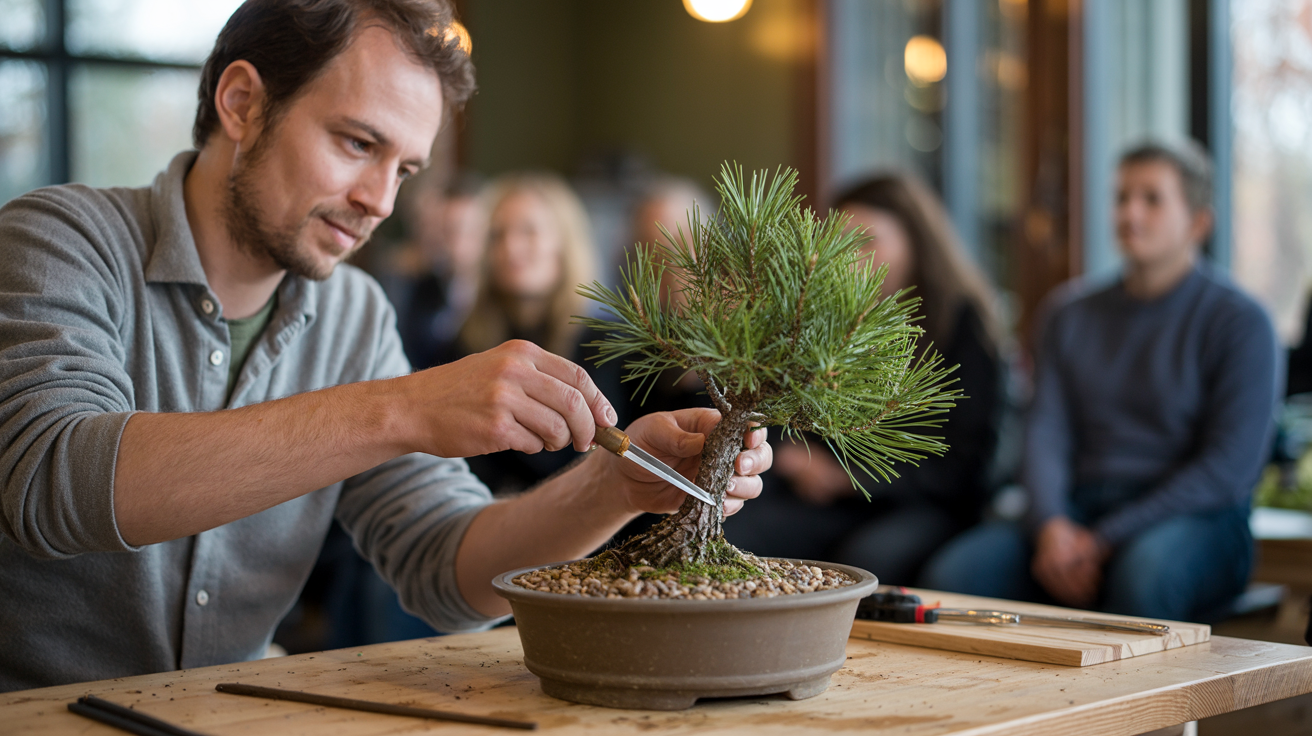

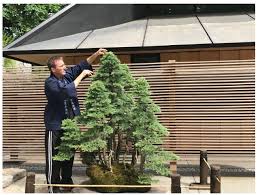
We have long admired practitioners who bridge cultures with integrity, and Michael Hagedorn stands as one of the most thoughtful voices in that conversation. An American who completed a lengthy apprenticeship in Japan and returned to establish a studio and teaching practice in the Pacific Northwest, Hagedorn represents a generation that has worked to translate classical Japanese bonsai principles into a North American context without dilution or superficiality. In our view, his significance lies not merely in technical proficiency but in his sustained commitment to articulating the deeper grammar of the art—making visible what is so often left unspoken.
A Practice Rooted in Rigor
What distinguishes Hagedorn’s work is a clarity of line and restraint that reflects years of disciplined study. His trees, particularly his conifers, exhibit a structural logic that feels inevitable rather than forced. The branching reads cleanly, the negative space is intentional, and there is an absence of the overwrought detail that can plague less confident hands. This is the hallmark of someone who has internalized foundational principles deeply enough to apply them with subtlety. We see in his styling a respect for the material itself—an attentiveness to what the tree is suggesting rather than an imposition of ego onto the form.
His approach to species such as pines and junipers demonstrates an understanding of horticultural realities as much as aesthetic ones. He is known for emphasizing that health and vigor are prerequisites for refinement, a perspective that counters the temptation among intermediate growers to style aggressively at the expense of the tree’s long-term vitality. This integration of craft and cultivation is something we believe separates enduring work from the merely decorative.
Teaching Through Transparency
Hagedorn’s influence extends well beyond his own garden. Through his blog, workshops, and public writing, he has made a practice of demystifying technique without oversimplifying it. He writes about seasonal work, soil science, and styling decisions with a specificity that is rare in the bonsai world, where vague maxims often substitute for clear instruction. His willingness to articulate not just the what but the why has made his teaching accessible to growers at varied skill levels, while maintaining intellectual rigor.
We appreciate that his pedagogy is fundamentally about perception—training the eye to see structure, balance, and potential. This is not instruction in recipes but in developing judgment, which is ultimately what separates competent practitioners from artists. His emphasis on observation, on spending time simply looking at trees both in pots and in nature, echoes the classical training methods he received and offers a corrective to the impatience that social media can encourage.
Our Take
Hagedorn matters because he embodies a model of cross-cultural learning done right: respectful, sustained, and serious. He did not parachute into Japan for a brief workshop tour but committed years to immersion and emerged with both skills and humility intact. In an era when the term “master” is sometimes conferred prematurely, his work reminds us that mastery is earned through sustained attention and the slow accumulation of insight. His trees are convincing because they are born of both knowledge and restraint.
One Lesson to Carry Forward
If there is a single takeaway from Hagedorn’s approach, it is this: refinement cannot be rushed. The temptation to wire, prune, and restyle constantly is strong, particularly when progress feels slow. But his work demonstrates that the most compelling trees are those given time to respond, to heal, to settle into their forms. For the grower seeking to improve, the actionable step is simple—schedule less, observe more. Let the tree grow between interventions. Trust the process, and resist the urge to impose solutions before the tree has shown you what it needs. That patience, more than any technique, is what his work teaches us.
This article was created with AI assistance by the Bonsai World editorial team.